



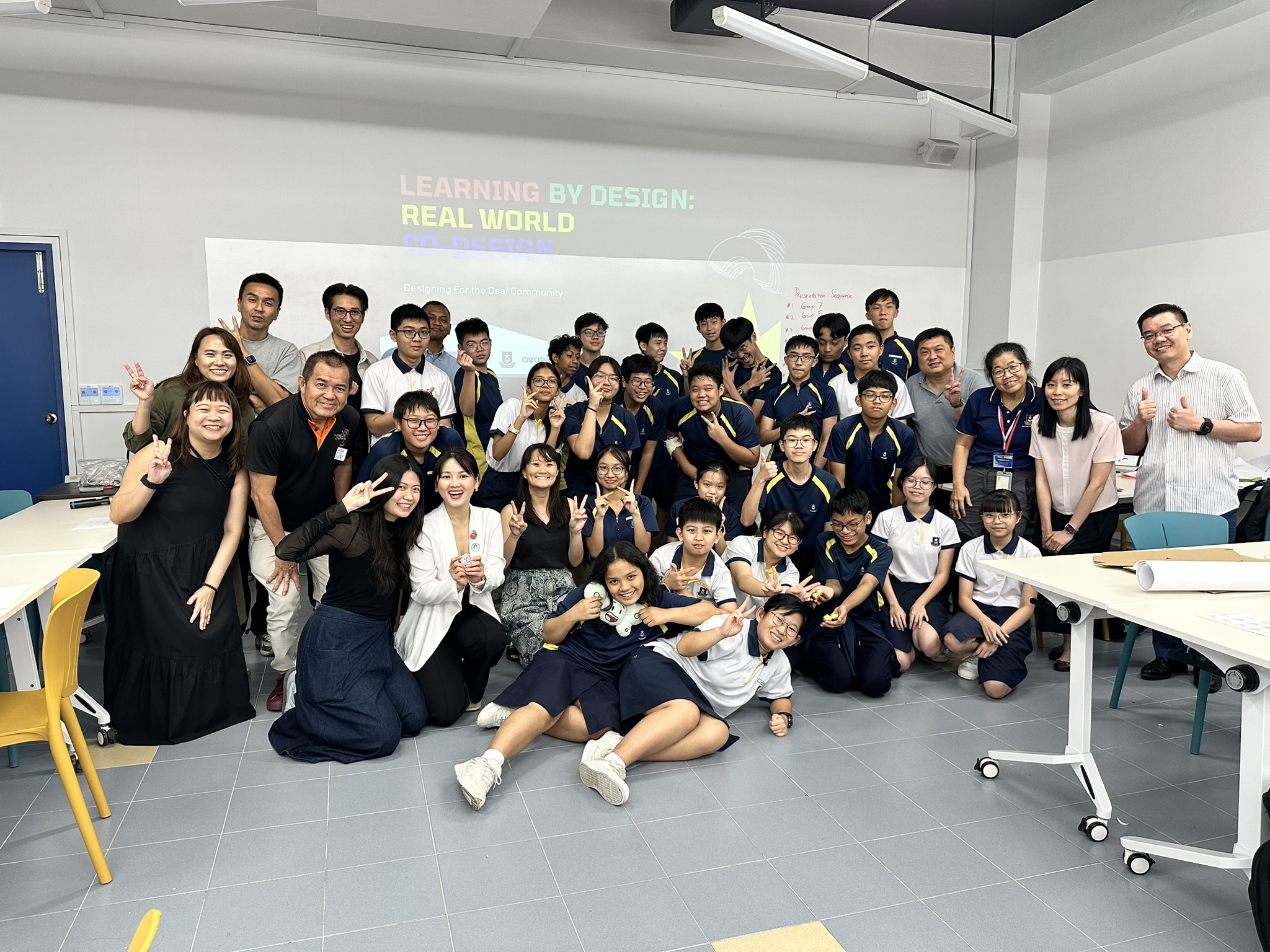
How a Design Thinking Workshop in Singapore Built Youth Awareness for the Deaf Community: Real-World Co-Design Case Study
- Design Thinking
- Creative Investment
- Education
How a Design Thinking Workshop in Singapore Built Youth Awareness for the Deaf Community: Real-World Co-Design Case Study
In today’s rapidly evolving world, the role of design extends far beyond aesthetics or functionality. It has the power to shape behaviours, foster empathy, and drive meaningful social impact. Recognising this potential, a unique educational initiative was developed to empower young learners to engage with real-world challenges—particularly in the context of inclusivity and accessibility.
The “Designing Youth Awareness for the Deaf Community – Real World Co-Design Platform” programme is a collaborative effort that brought together students, educators, designers, and members of the Deaf community to co-create solutions for a more inclusive society. Conducted in partnership with Hougang Secondary School, Creativeans, DesignSingapore Council (DSG), SG Enable, and the SADeaf, the programme demonstrates how design thinking can be applied meaningfully in education while creating tangible social impact.
This case study highlights the journey, methodology, and outcomes of the programme, showcasing how a structured co-design approach can empower youths to become empathetic problem-solvers and active contributors to community development.
Programme Overview and Purpose
At its core, the programme was designed to address a simple yet powerful question:
How might we enable youths to better understand and empathise with the Deaf and hard-of-hearing community in Singapore, while discovering the realities of inclusive communication?
This challenge formed the foundation of a five-session Design Thinking programme conducted between January and March 2026. A total of 40 participants—including 33 students and 7 educators—took part in this initiative, engaging in a structured learning journey that combined theory, real-world exposure, and hands-on co-creation.
Unlike traditional classroom learning, this programme was intentionally designed as a Real World Co-Design Platform, where students did not simply learn about inclusion—they actively collaborated with the Deaf community to design solutions with them, rather than for them.
Partners, Sponsors, and Co-Creators
The success of this programme lies in its strong ecosystem of collaborators, each playing a distinct and meaningful role:
- Creativeans – Programme lead and facilitator, bringing expertise in Design Thinking through its structured methodology and workshop delivery
- Hougang Secondary School – Educational partner providing students and integrating the programme into a real learning environment
- DesignSingapore Council (DSG) – Supporting the initiative under the Learning by Design framework
- SG Enable – Key supporting partner driving inclusion and enabling disability-focused initiatives in Singapore.
- SADeaf (Singapore Association for the Deaf) – Critical co-creator, providing real-world insights, lived experiences, and validation of ideas
What is Real-World Co-Design?
Traditional problem-solving often relies on assumptions made by designers or organisations. However, in the context of social impact—especially when working with communities such as the Deaf or hard-of-hearing—assumptions can lead to ineffective or even inappropriate solutions.
This programme adopts a Real-World Co-Design approach, which emphasises:
- Direct engagement with end users
- Inclusion of lived experiences in decision-making
- Iterative feedback loops with real stakeholders
- Designing with empathy, not just functionality
Through this approach, students worked alongside SADeaf representatives to ensure that their ideas were grounded in reality, culturally sensitive, and practically relevant.
As highlighted in the programme, this process shifts the role of users from passive recipients to active participants, ensuring that solutions are meaningful and inclusive.
Programme Timeline and Structure
The programme was conducted across five structured workshops, each aligned with key stages of the Design Thinking process:
- Workshop 1: Learning Journey
- Workshop 2: Introduction to Design Thinking & Empathise
- Workshop 3: Problem Definition, Value Proposition & Ideation
- Workshop 4: Prototyping & Testing
- Workshop 5: Final Presentation
Each session was carefully designed to build upon the previous one, guiding students from understanding to action.
The Design Thinking Journey
1. Empathise: Understanding the Deaf Community
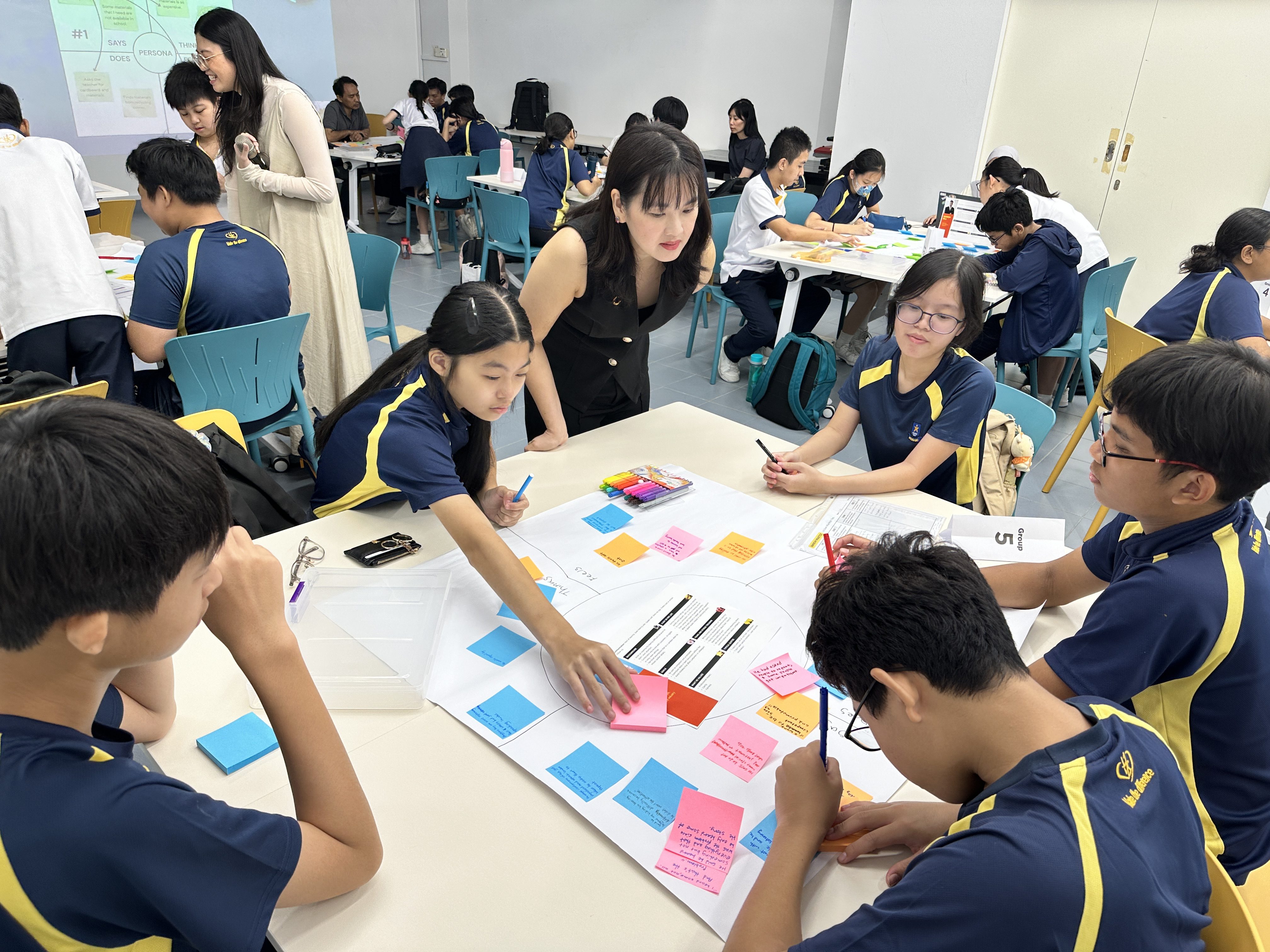
The programme began with a Deaf Awareness Programme conducted by SADeaf, where students were introduced to Deaf culture, communication methods, and everyday challenges faced by the community.
Rather than learning through textbooks, students engaged in:
- Interactive activities
- Guided sharing sessions
- Exposure to real-life scenarios
This direct interaction helped students move beyond stereotypes and assumptions, allowing them to develop genuine empathy.
This stage was critical, as it laid the foundation for all subsequent design decisions.
2. Define: Framing the Right Problem
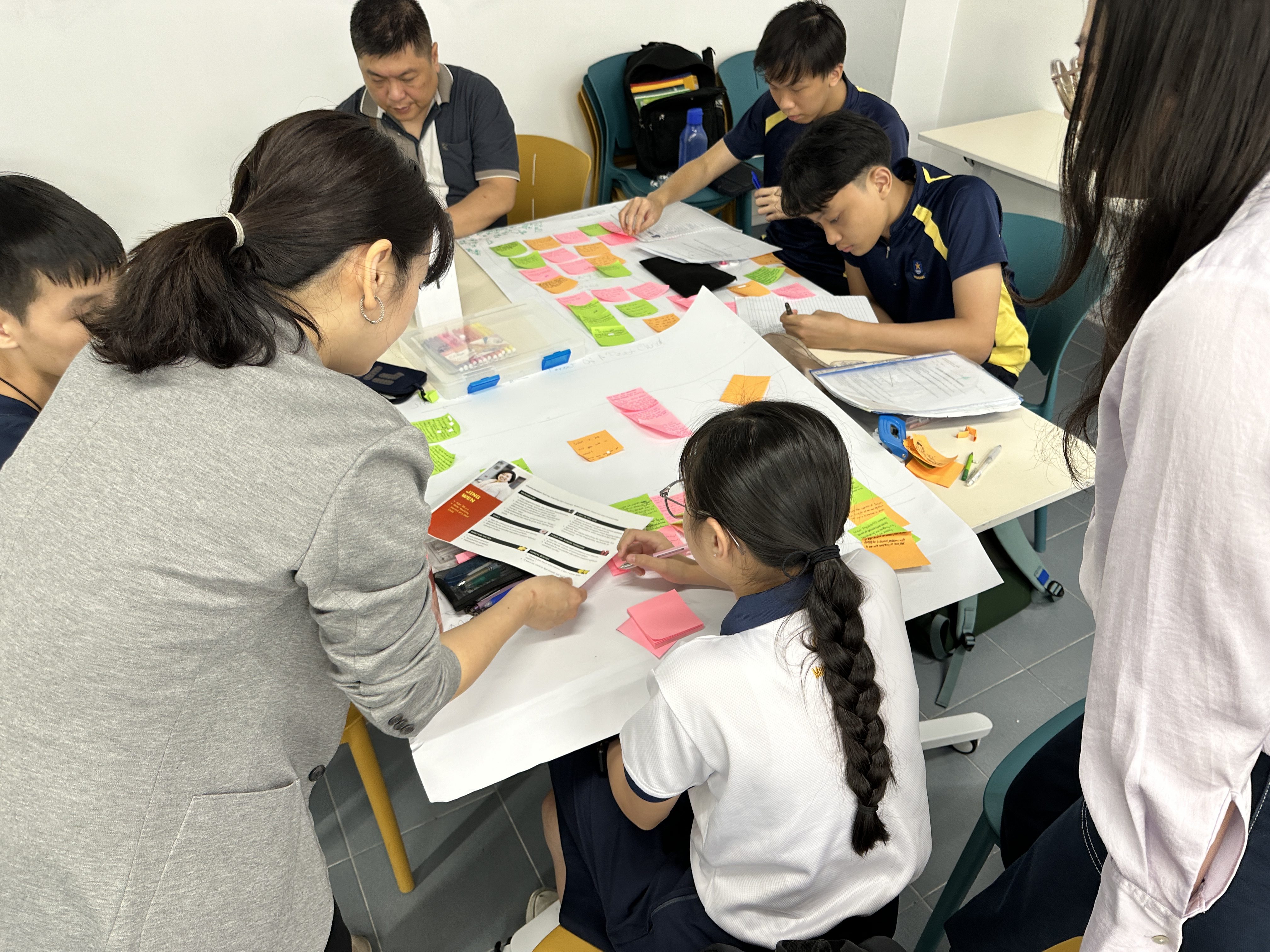
After gaining initial insights, students were guided to synthesise their observations into meaningful problem statements.
Through tools such as empathy mapping and “How Might We” questions, students learned to:
- Identify real user needs
- Distinguish between assumptions and insights
- Frame challenges in a human-centred way
This stage ensured that solutions would address actual pain points, rather than superficial issues.
3. Ideate: Generating Meaningful Ideas
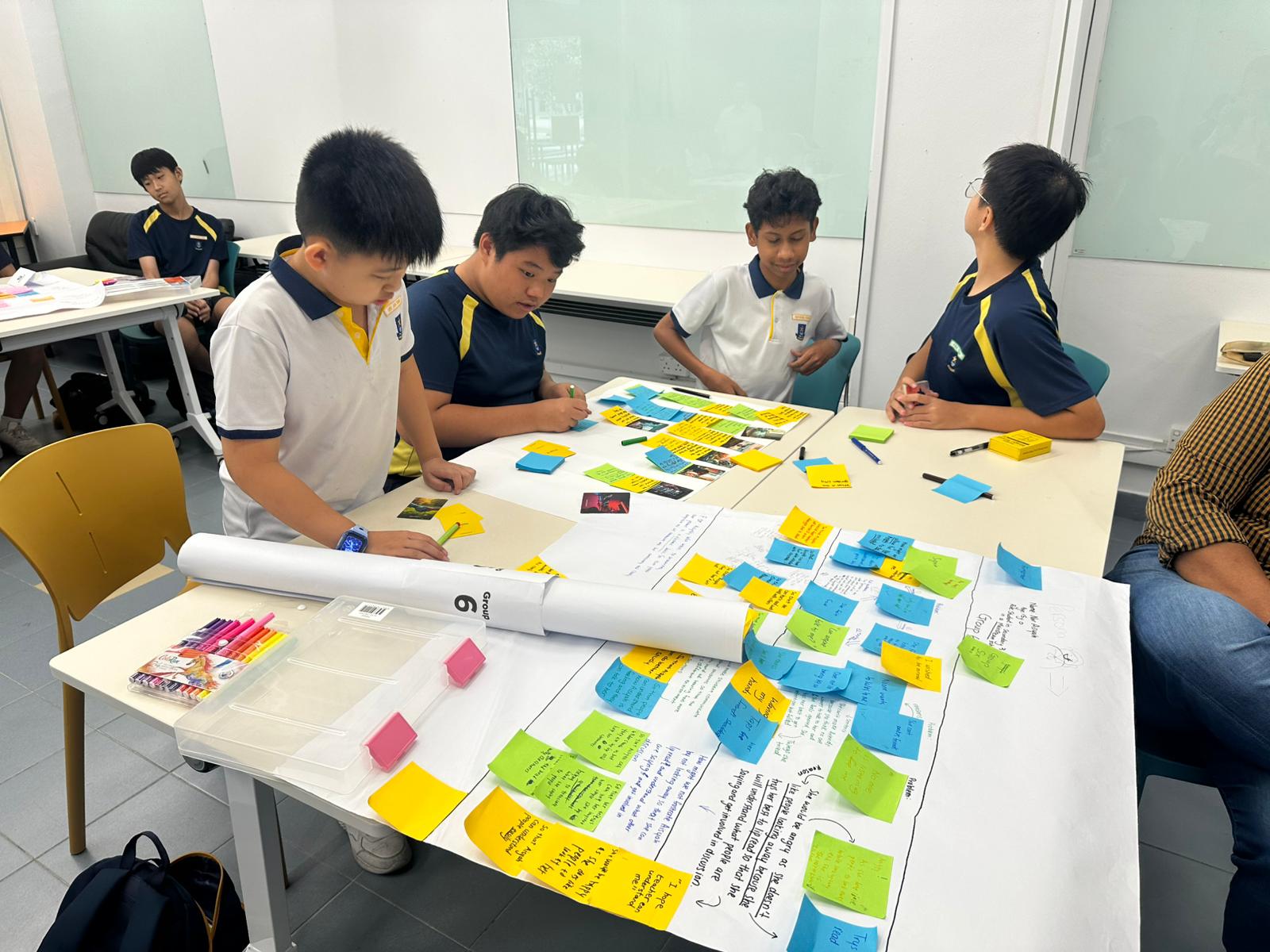
With a clear understanding of the problem, students moved into ideation.
They explored a wide range of concepts, including:
- Digital tools
- Wearable devices
- Community platforms
- Educational games
Encouraged to think creatively and collaboratively, students generated ideas that addressed both functional needs (e.g. communication tools) and emotional needs (e.g. belonging and connection).
4. Prototype and Test: Learning Through Making
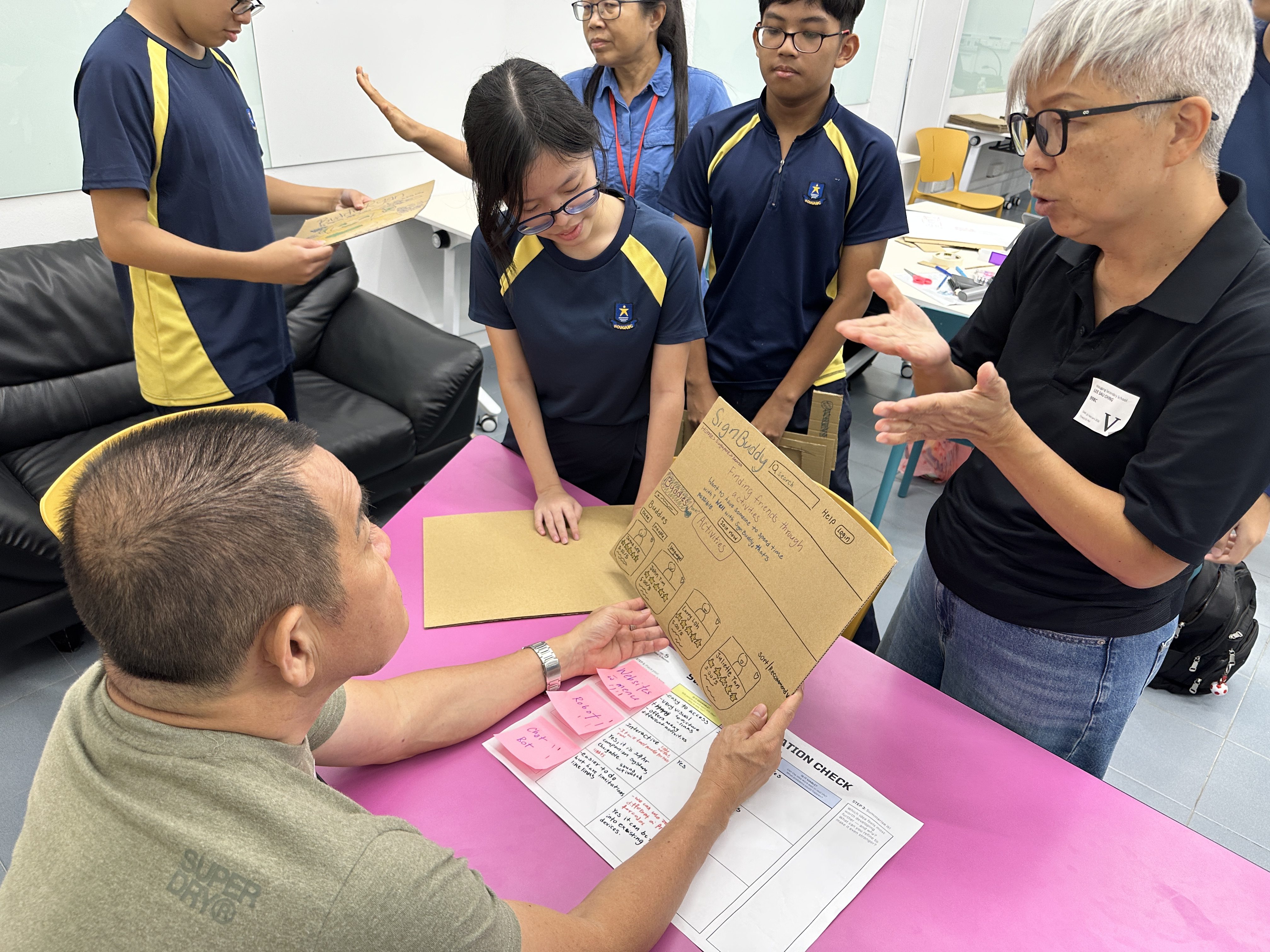
In the prototyping phase, students translated their ideas into tangible concepts using simple materials and digital mock-ups.
This stage was particularly impactful because it involved direct feedback from SADeaf representatives, who evaluated the ideas based on:
- Practicality
- Relevance
- Cultural sensitivity
- Real-world usability
Students were challenged to refine their ideas iteratively, learning that good design is not about getting it right the first time—but about improving through feedback.
Importantly, students demonstrated strong openness to feedback, responding positively to critiques and refining their ideas with empathy rather than defensiveness.
5. Final Presentation: From Ideas to Impact
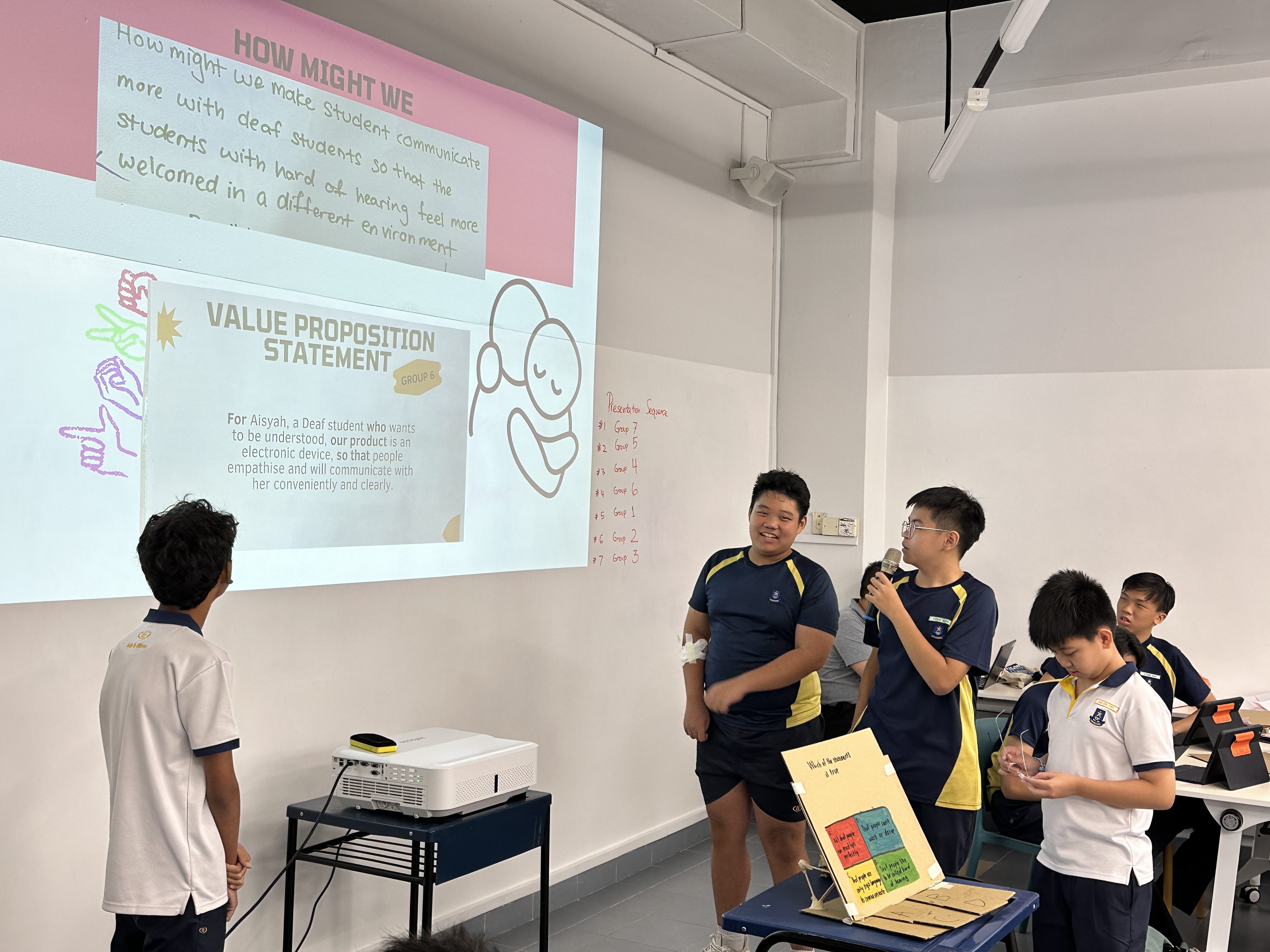
In the final session, students presented their refined concepts to peers, educators, and stakeholders—including SADeaf representatives.
This culminated in a series of proposals that were:
- Thoughtful
- User-centred
- Grounded in real-world needs
The presence of SADeaf as judges ensured that ideas were validated not just academically, but from a community perspective.
Role of SADeaf as Co-Creator
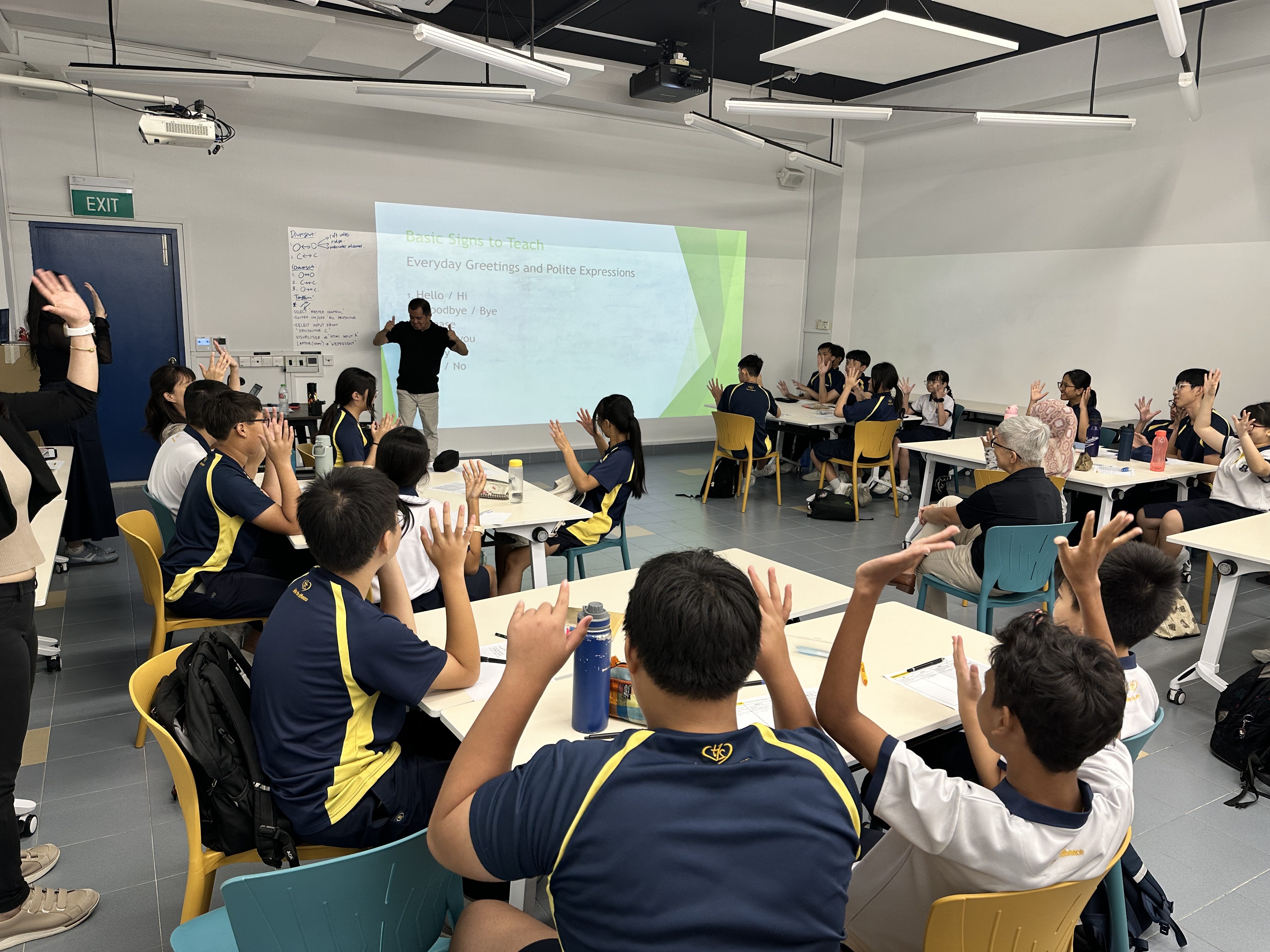
SADeaf’s involvement was central to the programme’s success.
Their role included:
- Conducting the Deaf Awareness Programme
- Providing real-world insights into Deaf culture and communication
- Engaging directly with student groups during prototyping
- Offering feedback on practicality and relevance
- Participating as judges during final presentations
This active involvement ensured that the programme was not hypothetical—but deeply rooted in lived experience.
Key Outcomes and Impact
1. Strengthening Empathy and Awareness
One of the most significant outcomes of the programme was the measurable increase in empathy among participants.
Survey results showed that participants became more capable of:
- Understanding others’ perspectives
- Recognising real challenges faced by the Deaf community
- Responding with sensitivity and respect
Empathy saw one of the highest improvements among all measured attributes.
2. Building Design Thinking Capabilities
Students developed key Design Thinking skills, including:
- Problem framing
- Creative ideation
- Collaboration
- Iterative testing
These skills not only enhanced their ability to design solutions, but also prepared them for tackling complex real-world challenges.
3. Translating Learning into Action
Beyond mindset changes, students demonstrated the ability to translate their understanding into actionable ideas.
During prototyping and testing, students:
- Engaged directly with users
- Adapted their ideas based on feedback
- Improved the realism and relevance of their solutions
This reflects the programme’s success in achieving not just awareness, but applied learning.
Recommended Ideas and Innovation Themes
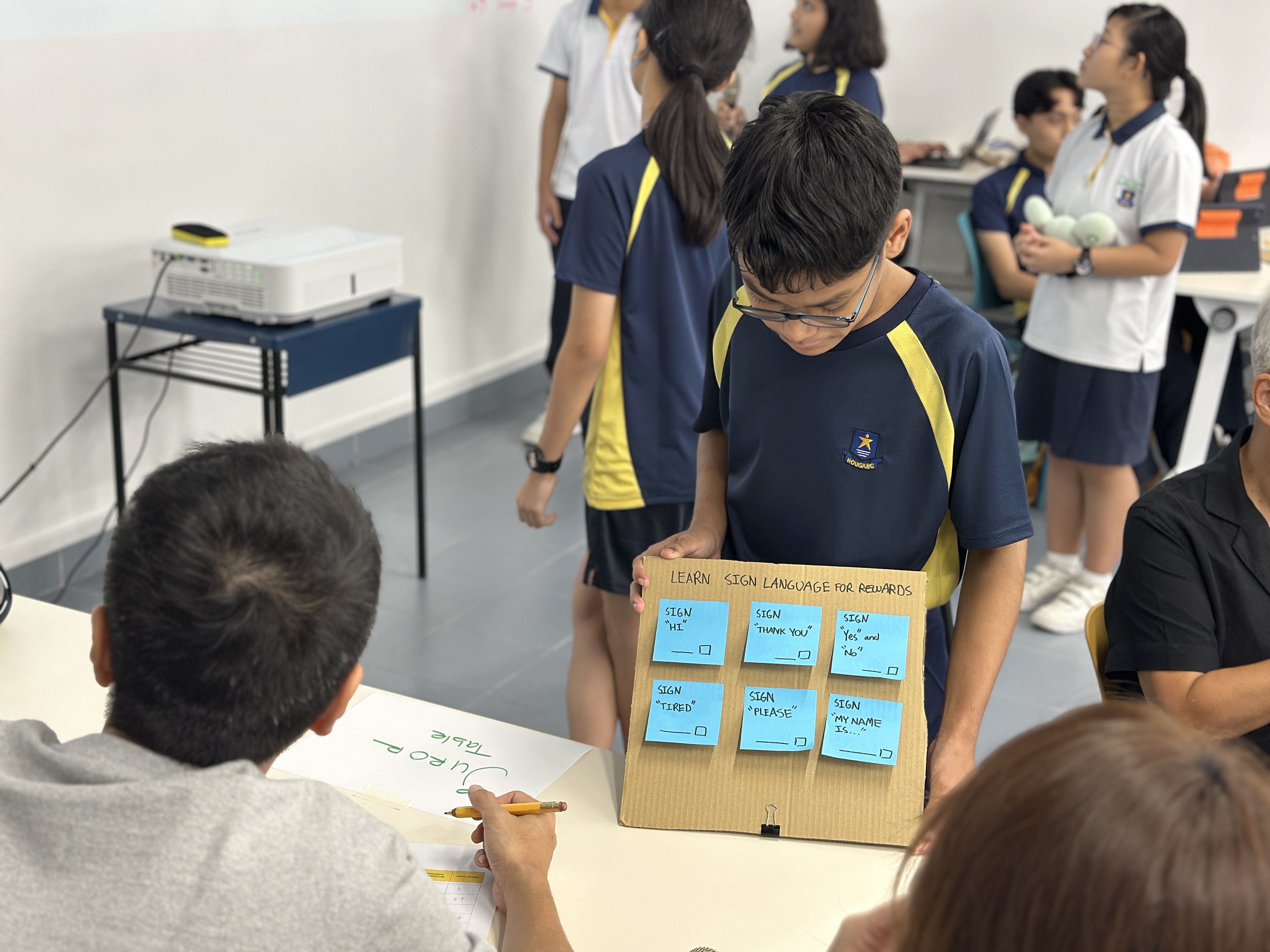
The ideas developed by students were grouped into four key themes:
1. Communication & Translation
Solutions focused on bridging communication gaps through:
- AI-powered apps
- Real-time translation tools
- Sign-to-speech and speech-to-sign technologies
These ideas address one of the most fundamental barriers faced by the Deaf community.
2. Independence & Daily Support
Concepts included:
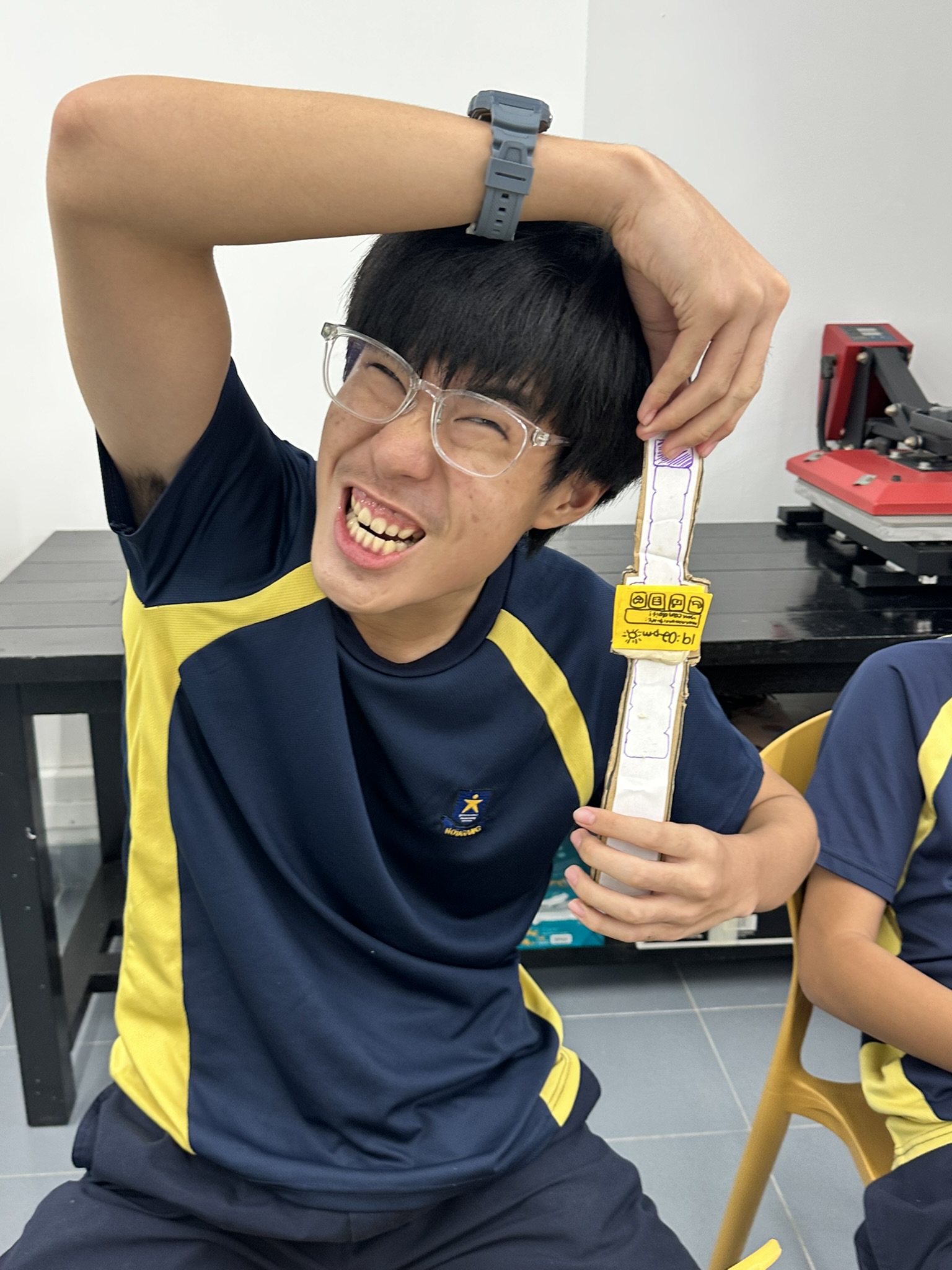
- Wearable devices
- Smart alerts and reminders
- Assistive tools for daily navigation
These ideas aim to enhance independence, safety, and confidence in everyday life.
3. Social Support & Community Connection
Students recognised that inclusion goes beyond accessibility.
Ideas included:
- Buddy platforms
- Community engagement tools
- Social activity matching systems
These concepts emphasise belonging, connection, and emotional wellbeing.
4. Youth Awareness & Inclusive Learning
This category focused on:
- Educational tools
- Interactive games
- Peer learning experiences
These ideas aim to foster awareness from a young age, building a more inclusive future generation.
Together, these themes reflect a holistic understanding of inclusion—covering functional, social, and emotional dimensions.
Why This Programme Matters
This programme demonstrates that when young people are given the right tools, guidance, and exposure, they are capable of generating meaningful solutions to complex social challenges.
More importantly, it highlights that:
- Inclusion must be co-created, not assumed
- Empathy must be experienced, not taught passively
- Design can be a powerful tool for social change
By embedding real-world engagement into education, the programme moves beyond theory—creating lasting impact on both participants and the community.
Conclusion: A Collaborative Effort Towards Inclusion
The “Designing Youth Awareness for the Deaf Community” programme stands as a strong example of how education, design, and community collaboration can come together to create meaningful change.
Through a structured Design Thinking process, students were able to:
- Understand the realities of the Deaf community
- Develop empathy-driven solutions
- Engage directly with real users
- Translate learning into actionable ideas
This would not have been possible without the collective efforts of all partners and stakeholders.
Creativeans extends its appreciation to Hougang Secondary School for their commitment to innovative education, SADeaf for their invaluable role as co-creators, and DesignSingapore Council (DSG) and SG Enable for their support in enabling this programme.
Together, this collaboration demonstrates how design can go beyond the classroom—empowering youths, strengthening communities, and shaping a more inclusive future for all.
In today’s rapidly evolving world, the role of design extends far beyond aesthetics or functionality. It has the power to shape behaviours, foster empathy, and drive meaningful social impact. Recognising this potential, a unique educational initiative was developed to empower young learners to engage with real-world challenges—particularly in the context of inclusivity and accessibility.
The “Designing Youth Awareness for the Deaf Community – Real World Co-Design Platform” programme is a collaborative effort that brought together students, educators, designers, and members of the Deaf community to co-create solutions for a more inclusive society. Conducted in partnership with Hougang Secondary School, Creativeans, DesignSingapore Council (DSG), SG Enable, and the SADeaf, the programme demonstrates how design thinking can be applied meaningfully in education while creating tangible social impact.
This case study highlights the journey, methodology, and outcomes of the programme, showcasing how a structured co-design approach can empower youths to become empathetic problem-solvers and active contributors to community development.
Programme Overview and Purpose
At its core, the programme was designed to address a simple yet powerful question:
How might we enable youths to better understand and empathise with the Deaf and hard-of-hearing community in Singapore, while discovering the realities of inclusive communication?
This challenge formed the foundation of a five-session Design Thinking programme conducted between January and March 2026. A total of 40 participants—including 33 students and 7 educators—took part in this initiative, engaging in a structured learning journey that combined theory, real-world exposure, and hands-on co-creation.
Unlike traditional classroom learning, this programme was intentionally designed as a Real World Co-Design Platform, where students did not simply learn about inclusion—they actively collaborated with the Deaf community to design solutions with them, rather than for them.
Partners, Sponsors, and Co-Creators
The success of this programme lies in its strong ecosystem of collaborators, each playing a distinct and meaningful role:
- Creativeans – Programme lead and facilitator, bringing expertise in Design Thinking through its structured methodology and workshop delivery
- Hougang Secondary School – Educational partner providing students and integrating the programme into a real learning environment
- DesignSingapore Council (DSG) – Supporting the initiative under the Learning by Design framework
- SG Enable – Key supporting partner driving inclusion and enabling disability-focused initiatives in Singapore.
- SADeaf (Singapore Association for the Deaf) – Critical co-creator, providing real-world insights, lived experiences, and validation of ideas
What is Real-World Co-Design?
Traditional problem-solving often relies on assumptions made by designers or organisations. However, in the context of social impact—especially when working with communities such as the Deaf or hard-of-hearing—assumptions can lead to ineffective or even inappropriate solutions.
This programme adopts a Real-World Co-Design approach, which emphasises:
- Direct engagement with end users
- Inclusion of lived experiences in decision-making
- Iterative feedback loops with real stakeholders
- Designing with empathy, not just functionality
Through this approach, students worked alongside SADeaf representatives to ensure that their ideas were grounded in reality, culturally sensitive, and practically relevant.
As highlighted in the programme, this process shifts the role of users from passive recipients to active participants, ensuring that solutions are meaningful and inclusive.
Programme Timeline and Structure
The programme was conducted across five structured workshops, each aligned with key stages of the Design Thinking process:
- Workshop 1: Learning Journey
- Workshop 2: Introduction to Design Thinking & Empathise
- Workshop 3: Problem Definition, Value Proposition & Ideation
- Workshop 4: Prototyping & Testing
- Workshop 5: Final Presentation
Each session was carefully designed to build upon the previous one, guiding students from understanding to action.
The Design Thinking Journey
1. Empathise: Understanding the Deaf Community
The programme began with a Deaf Awareness Programme conducted by SADeaf, where students were introduced to Deaf culture, communication methods, and everyday challenges faced by the community.
Rather than learning through textbooks, students engaged in:
- Interactive activities
- Guided sharing sessions
- Exposure to real-life scenarios
This direct interaction helped students move beyond stereotypes and assumptions, allowing them to develop genuine empathy.
This stage was critical, as it laid the foundation for all subsequent design decisions.
2. Define: Framing the Right Problem
After gaining initial insights, students were guided to synthesise their observations into meaningful problem statements.
Through tools such as empathy mapping and “How Might We” questions, students learned to:
- Identify real user needs
- Distinguish between assumptions and insights
- Frame challenges in a human-centred way
This stage ensured that solutions would address actual pain points, rather than superficial issues.
3. Ideate: Generating Meaningful Ideas
With a clear understanding of the problem, students moved into ideation.
They explored a wide range of concepts, including:
- Digital tools
- Wearable devices
- Community platforms
- Educational games
Encouraged to think creatively and collaboratively, students generated ideas that addressed both functional needs (e.g. communication tools) and emotional needs (e.g. belonging and connection).
4. Prototype and Test: Learning Through Making
In the prototyping phase, students translated their ideas into tangible concepts using simple materials and digital mock-ups.
This stage was particularly impactful because it involved direct feedback from SADeaf representatives, who evaluated the ideas based on:
- Practicality
- Relevance
- Cultural sensitivity
- Real-world usability
Students were challenged to refine their ideas iteratively, learning that good design is not about getting it right the first time—but about improving through feedback.
Importantly, students demonstrated strong openness to feedback, responding positively to critiques and refining their ideas with empathy rather than defensiveness.
5. Final Presentation: From Ideas to Impact
In the final session, students presented their refined concepts to peers, educators, and stakeholders—including SADeaf representatives.
This culminated in a series of proposals that were:
- Thoughtful
- User-centred
- Grounded in real-world needs
The presence of SADeaf as judges ensured that ideas were validated not just academically, but from a community perspective.
Role of SADeaf as Co-Creator
SADeaf’s involvement was central to the programme’s success.
Their role included:
- Conducting the Deaf Awareness Programme
- Providing real-world insights into Deaf culture and communication
- Engaging directly with student groups during prototyping
- Offering feedback on practicality and relevance
- Participating as judges during final presentations
This active involvement ensured that the programme was not hypothetical—but deeply rooted in lived experience.
Key Outcomes and Impact
1. Strengthening Empathy and Awareness
One of the most significant outcomes of the programme was the measurable increase in empathy among participants.
Survey results showed that participants became more capable of:
- Understanding others’ perspectives
- Recognising real challenges faced by the Deaf community
- Responding with sensitivity and respect
Empathy saw one of the highest improvements among all measured attributes.
2. Building Design Thinking Capabilities
Students developed key Design Thinking skills, including:
- Problem framing
- Creative ideation
- Collaboration
- Iterative testing
These skills not only enhanced their ability to design solutions, but also prepared them for tackling complex real-world challenges.
3. Translating Learning into Action
Beyond mindset changes, students demonstrated the ability to translate their understanding into actionable ideas.
During prototyping and testing, students:
- Engaged directly with users
- Adapted their ideas based on feedback
- Improved the realism and relevance of their solutions
This reflects the programme’s success in achieving not just awareness, but applied learning.
Recommended Ideas and Innovation Themes
The ideas developed by students were grouped into four key themes:
1. Communication & Translation
Solutions focused on bridging communication gaps through:
- AI-powered apps
- Real-time translation tools
- Sign-to-speech and speech-to-sign technologies
These ideas address one of the most fundamental barriers faced by the Deaf community.
2. Independence & Daily Support
Concepts included:
- Wearable devices
- Smart alerts and reminders
- Assistive tools for daily navigation
These ideas aim to enhance independence, safety, and confidence in everyday life.
3. Social Support & Community Connection
Students recognised that inclusion goes beyond accessibility.
Ideas included:
- Buddy platforms
- Community engagement tools
- Social activity matching systems
These concepts emphasise belonging, connection, and emotional wellbeing.
4. Youth Awareness & Inclusive Learning
This category focused on:
- Educational tools
- Interactive games
- Peer learning experiences
These ideas aim to foster awareness from a young age, building a more inclusive future generation.
Together, these themes reflect a holistic understanding of inclusion—covering functional, social, and emotional dimensions.
Why This Programme Matters
This programme demonstrates that when young people are given the right tools, guidance, and exposure, they are capable of generating meaningful solutions to complex social challenges.
More importantly, it highlights that:
- Inclusion must be co-created, not assumed
- Empathy must be experienced, not taught passively
- Design can be a powerful tool for social change
By embedding real-world engagement into education, the programme moves beyond theory—creating lasting impact on both participants and the community.
Conclusion: A Collaborative Effort Towards Inclusion
The “Designing Youth Awareness for the Deaf Community” programme stands as a strong example of how education, design, and community collaboration can come together to create meaningful change.
Through a structured Design Thinking process, students were able to:
- Understand the realities of the Deaf community
- Develop empathy-driven solutions
- Engage directly with real users
- Translate learning into actionable ideas
This would not have been possible without the collective efforts of all partners and stakeholders.
Creativeans extends its appreciation to Hougang Secondary School for their commitment to innovative education, SADeaf for their invaluable role as co-creators, and DesignSingapore Council (DSG) and SG Enable for their support in enabling this programme.
Together, this collaboration demonstrates how design can go beyond the classroom—empowering youths, strengthening communities, and shaping a more inclusive future for all.











YOU MIGHT ALSO LIKE
Dari Corporate Brand Strategy ke Employer Branding yang Autentik
- Branding
- Business Design

Rekomendasi 5 Agency Top Indonesia untuk Tingkatkan Brand Value
- Branding
- Marketing
- Graphic Design
- Venture
- Branding
- Creative Investment
- Communication Design


Yulia Saksen
International Brand Consultant and Co-Founder of Creativeans
Your brand might look great. But is it working?
Discover what’s missing in your brand strategy and how a few changes can grow your business.
You want to do a brand revamp? Now what?
We’ll help you understand what’s needed, what works, and how to make your company look great.
Book a Free Brand Consultation with Yulia in 2026
CONTACT US NOW
BRANDSBUILDER.AI
BrandsBuilder.ai streamlines every phase of branding, from strategy and positioning to identity creation and customer experience.
HOVARLAY
HOVARLAY transforms packaging and campaigns into powerful digital touchpoints. No apps. No reprints. No barriers.
Business Enquiry
info@creativeans.comCareer / Internship
collaborate@creativeans.com
Creativeans is an award-winning brand and design consultancy based in Singapore, Milan and Jakarta. We build brands that matter.


 Singapore
  Indonesia
  Italy
Italy 