BACK TO
RESOURCES

Web Design Trends 2026 (Singapore Edition) — Website Design Outlook from a Web Design Agency

  • Branding
  • Experience Design
  • UI/UX Design
Web Design Trends 2026 (Singapore Edition) — Website Design Outlook from a Web Design Agency

Web Design Trends 2026 (Singapore Edition) — Website Design Outlook from a Web Design Agency

You can feel it: the web is growing up. In Singapore, the best teams have stopped chasing novelties and started treating their sites like products with a roadmap. As a web design agency in Singapore, Creativeans spends every week turning strategy into structure (IA), interface (UI), and words (content)—then operating the site so it stays fast, accessible, and clear. That vantage point lets us separate real shifts from passing fashions. Here’s our practical briefing for website design in 2026.

Why website design still starts with strategy (what a web design agency knows)

Before pixels and code, the work is positioning. Who are we speaking to, what do they need to do, what objections get in the way, and what proof removes those objections? Teams that answer these questions—even on a single sheet—reduce the cost of everything that follows.

A web design agency doesn’t start with themes; it starts with a message map. We translate audience outcomes into an information architecture that mirrors decision journeys, then design components and copy to move visitors forward. When clients ask for a new module, we check the map. Does it serve the journey? Does it strengthen proof? If not, it waits. That discipline makes the difference between a pretty site and a productive one, and it’s the core of effective website design.

Why website design companies struggle without a message map

Production-first website design companies are great at assembly, but without an agreed message and content model they are forced to stabilise uncertainty with code. You end up with templates that look fine but don’t say anything decisive, and a CMS that fights your editors. The cure isn’t more revisions; it’s strategy that tells everyone what matters—especially in B2B website design where proof and clarity win deals.

What web designers need from strategy to succeed online

Designers do their best work when hierarchy is obvious: what deserves the hero, what belongs underneath, what proof to surface, and which call-to-action to present. Strategy gives them that. It also decides which pages must be bilingual (EN/中文), where PDPA notices live, and how internal links will guide readers from learning to deciding. Strategy isn’t decoration; it’s velocity for your website design programme.

AI in website design: a web design agency playbook

In 2026, AI is a collaborator, not an autopilot. Used well, it speeds research, drafting, image variance, microcopy, and QA. But it needs guardrails—especially around privacy and accuracy.

We use AI where it compounds human work: drafting bilingual summaries from source material, generating first-pass alt text, proposing wireframe variations to test, and checking designs against accessibility rules. We don’t ask it to invent claims or replace editors. In a PDPA context, we keep sensitive data out of training loops and always log which bits were AI-assisted so changes are reviewable.

How a website design company team can use AI for content and QA

A production-oriented website design company can still benefit greatly: AI accelerates placeholder copy, image resizing, and regression checks, helping them ship on time. The key is human review. Your legal team should vet privacy language; your product team should approve claims; your marketers should adjust tone to match brand.

When web design agencies add personalisation with consent

Personalisation is worth it when it’s lightweight and honest. A web design agency might swap proof blocks by industry or show different case studies to new vs returning visitors, but only after consent and with a measurable hypothesis. If it doesn’t improve task completion—enquiry, sign-up, add-to-cart—it goes.

Performance-first sites for Singapore

Most of your visitors are on phones—on the MRT, in lift lobbies, in cafés with shared Wi-Fi. They won’t wait. Sites that feel instant win more often, even before conversion. Performance isn’t a bonus feature; it’s a trust signal at the heart of modern website design.

We set budgets in design, not as a clean-up task: image caps per template, AVIF/WebP with sensible fallbacks, ruthless script governance, and a font strategy with minimal weights. Then we prove it: Core Web Vitals dashboards in your monthly report, spot checks on slower pages, and escalation paths when something regresses. This is where systematic website optimization pays back every week.

Website design services that keep pages fast

The routines that matter aren’t glamorous: resizing on upload in the CMS, removing third-party tags that don’t earn their keep, lazy-loading below-the-fold media, compressing SVGs, and enforcing tokenised spacing so layouts don’t require heavy CSS overrides. These are the quiet website design services that keep pages fast long after launch.

Privacy UX in website design: PDPA done right by a website design agency

Consent isn’t a banner; it’s an interaction worth designing. Readers should understand what you collect and why, and they should be able to change their minds. We treat consent like a first-class flow: plain language, clear toggles, and events that honour the choice. We A/B test copy and placement because consent rates affect your data quality and therefore your decisions.

A seasoned website design agency wires analytics to respect consent states and provides a readable audit trail. When legal, marketing and engineering share this understanding, friction disappears and trust grows across your web design and development stack.

Design systems for website design: what a website design company should deliver

A system that non-designers can use beats a glossy PDF. The right size for most Singapore teams is simple: tokens for colour, type, spacing and motion; 10–14 reusable components (buttons, inputs, cards, banners, tabs, accordions, media blocks); and a few page-level patterns (forms, pricing, testimonials, CTAs). Keep the documentation short and practical.

We version tokens just like code, annotate accessibility in the component, and provide a two-page publishing guide. Editors learn to assemble pages without breaking layouts, and devs can iterate without rewriting the world.

Website design services editors actually use

If your system doesn’t help editors, it isn’t a system. We provide page frameworks with field hints, alt-text suggestions, link-label patterns, and a short glossary to keep terminology consistent across English and Chinese. These website design services keep quality steady as more authors publish, and they support a responsive web design agency approach where small screens come first.

Content that converts: proof, IA and microcopy

Words move numbers. In 2026, content design outruns decoration. Service pages answer the reader’s question in the first screen, call out benefits and risks, and surface two or three pieces of proof where they reduce doubt. Case studies are scannable and quantified. Resource hubs are organised by intent, not date. Landing pages serve one audience and one action.

Craft in web designing

Small, thoughtful details matter: helpful empty states; form labels that remove ambiguity; validation messages that explain how to fix errors; thank-you pages that set expectations and provide next steps. This is the calm, human craft in web designing that makes sites feel made rather than assembled.

What Singapore web designers prioritise in 2026

The best Singapore web designers share three priorities: speed on mobile, bilingual clarity, and accessibility by design. That means readable typographic scales for both EN and 中文, large tap targets, visible focus states, contrast-safe colour pairs, and motion that can be turned down. They also insist on honest imagery; stock-heavy pages underperform and work against mobile-friendly web design goals.

Composable vs conventional stacks: a web design agency view for 2026

Headless and composable architectures can be brilliant for multi-brand, multi-market, or omnichannel situations. But complexity has a cost. Our rule is simple: choose the lowest-complexity stack that still fulfils your roadmap. For many organisations, WordPress for editorial, Shopify for commerce, or Webflow for marketing—each with good governance—beats an elaborate micro-services setup you can’t staff.

Where web design agencies keep it simple

Experienced web design agencies start with content modelling and integrations. If the only reason for headless is “it sounds modern,” we stay conventional, then layer on APIs where they truly add value (search, catalogue, or personalisation). Start small, prove the benefit, scale with confidence. If the model truly demands it, we plan custom CMS development with a clear support path.

Web design services to in-house vs outsource

Keep message ownership and editorial decisions in-house. Outsource component engineering, performance budgets, accessibility testing, and integration spikes to specialists. This mix gives you speed without long-term bloat and makes your website design programme resilient.

E-commerce in SG: PDPs, payments and returns that reduce friction

Most shoppers land on product pages from search or social. Treat PDPs as landing pages: crisp headline that states the promise, benefit-first bullets, clear price, reviews you can trust, objection-busting FAQs, and frictionless checkout with wallets and PayNow (via gateways) where relevant. Provide returns and delivery clarity up-front; ambiguity kills conversion.

We keep PDPs fast: pre-sized images, smart galleries, and no heavy video unless it measurably helps. Then we measure relentlessly: which block increases add-to-carts; which FAQ stops chat escalations; which image set leads to fewer returns. For SMEs looking for affordable website design, this disciplined focus outperforms ornamental redesigns.

Motion, type and colour: small details, big payoffs

Motion earns its place when it helps understanding. Button feedback, form progress hints, and gentle section transitions do more than hero animations ever will. Typographically, confidence and restraint rule: large, legible headings; a minimal set of weights; and language-aware line lengths. Palettes go quieter with a single assertive accent. This discipline helps speed and makes brands feel modern without being loud—hallmarks of a responsive web design agency.

First-party analytics, consent and CRO rhythm

With browser changes and privacy expectations, first-party analytics with server-side pipelines move from “nice” to “necessary.” Collect fewer events but measure what matters: CTA taps, scroll depth on service pages, form steps, PDP interactions, and support deflections. Tie them to dashboards you’ll actually review monthly.

Then keep a light CRO pipeline: two experiments per month, one significant content improvement, and a performance/accessibility spot-check. This quiet rhythm compounds and strengthens the impact of your website design over time.

Choosing partners in 2026

If your brief is small and clear, a production-focused website design company in Singapore may ship efficiently. If you need discovery, content modelling and governance, an agency is safer. Some brands prefer a boutique web design agency for hands-on craft; others want a bigger team. Whatever you choose, ask for a message map, a task-based IA, an accessible component library, PDPA-aligned consent, and clear analytics events. Those artefacts separate true partners from vendors.

Equally, confirm long-term fit. A reliable web design company in Singapore should be comfortable with ongoing web design services like maintenance and incremental improvements—not just one-off builds.

Creativeans — Website Design Agency Singapore for 2026 Roadmaps

Creativeans is a strategy-led website design agency Singapore brands engage when they want sites that read clearly, load quickly, and convert reliably. We’re platform-agnostic and scope-honest. Our job is to ship the smallest, smartest release that achieves your outcome—then help you run it calmly.

Why Partner with a Web Design Agency Focused on Outcomes

We start with a Brand-to-Web workshop to produce a message map everyone can use. We translate it into task-based IA, then into an accessible design system—tokens, components, and page patterns with performance and accessibility budgets baked in. We configure the CMS to match your content model, wire PDPA-aligned consent, and set up first-party analytics that measure behaviour, not just traffic. Finally, we support you with a monthly cadence for CRO, content, and optimisation.

Book a Roadmapping Session with Our Web Design Agency Team

If you’re planning a redesign or a major enhancement in 2026, let’s map the next 90 days together. We’ll prioritise the highest-impact templates, recommend the lowest-complexity architecture that fits your roadmap, and outline a phased budget you can defend. You’ll leave with a plan that keeps your team focused and your site improving.

What to do next (your 2026 checklist)

  • Align on a one-page message map (audiences, outcomes, objections, proof, CTAs).
  • Build a task-based IA with a small set of templates and a sensible internal-linking plan.
  • Stand up a right-sized design system (tokens + components + patterns) with performance and accessibility budgets.
  • Configure a CMS that mirrors your content model and empowers editors.
  • Implement PDPA-respectful consent and first-party analytics with clear events.
  • Commit to a monthly operating rhythm for CRO, content, performance and accessibility.

Follow those steps and “trends” stop being noise—they become the habits that keep your website winning in 2026 and beyond.


Creativeans — the web design agency Singapore teams call when they need brand-true website design that performs.


You can feel it: the web is growing up. In Singapore, the best teams have stopped chasing novelties and started treating their sites like products with a roadmap. As a web design agency in Singapore, Creativeans spends every week turning strategy into structure (IA), interface (UI), and words (content)—then operating the site so it stays fast, accessible, and clear. That vantage point lets us separate real shifts from passing fashions. Here’s our practical briefing for website design in 2026.

Why website design still starts with strategy (what a web design agency knows)

Before pixels and code, the work is positioning. Who are we speaking to, what do they need to do, what objections get in the way, and what proof removes those objections? Teams that answer these questions—even on a single sheet—reduce the cost of everything that follows.

A web design agency doesn’t start with themes; it starts with a message map. We translate audience outcomes into an information architecture that mirrors decision journeys, then design components and copy to move visitors forward. When clients ask for a new module, we check the map. Does it serve the journey? Does it strengthen proof? If not, it waits. That discipline makes the difference between a pretty site and a productive one, and it’s the core of effective website design.

Why website design companies struggle without a message map

Production-first website design companies are great at assembly, but without an agreed message and content model they are forced to stabilise uncertainty with code. You end up with templates that look fine but don’t say anything decisive, and a CMS that fights your editors. The cure isn’t more revisions; it’s strategy that tells everyone what matters—especially in B2B website design where proof and clarity win deals.

What web designers need from strategy to succeed online

Designers do their best work when hierarchy is obvious: what deserves the hero, what belongs underneath, what proof to surface, and which call-to-action to present. Strategy gives them that. It also decides which pages must be bilingual (EN/中文), where PDPA notices live, and how internal links will guide readers from learning to deciding. Strategy isn’t decoration; it’s velocity for your website design programme.

AI in website design: a web design agency playbook

In 2026, AI is a collaborator, not an autopilot. Used well, it speeds research, drafting, image variance, microcopy, and QA. But it needs guardrails—especially around privacy and accuracy.

We use AI where it compounds human work: drafting bilingual summaries from source material, generating first-pass alt text, proposing wireframe variations to test, and checking designs against accessibility rules. We don’t ask it to invent claims or replace editors. In a PDPA context, we keep sensitive data out of training loops and always log which bits were AI-assisted so changes are reviewable.

How a website design company team can use AI for content and QA

A production-oriented website design company can still benefit greatly: AI accelerates placeholder copy, image resizing, and regression checks, helping them ship on time. The key is human review. Your legal team should vet privacy language; your product team should approve claims; your marketers should adjust tone to match brand.

When web design agencies add personalisation with consent

Personalisation is worth it when it’s lightweight and honest. A web design agency might swap proof blocks by industry or show different case studies to new vs returning visitors, but only after consent and with a measurable hypothesis. If it doesn’t improve task completion—enquiry, sign-up, add-to-cart—it goes.

Performance-first sites for Singapore

Most of your visitors are on phones—on the MRT, in lift lobbies, in cafés with shared Wi-Fi. They won’t wait. Sites that feel instant win more often, even before conversion. Performance isn’t a bonus feature; it’s a trust signal at the heart of modern website design.

We set budgets in design, not as a clean-up task: image caps per template, AVIF/WebP with sensible fallbacks, ruthless script governance, and a font strategy with minimal weights. Then we prove it: Core Web Vitals dashboards in your monthly report, spot checks on slower pages, and escalation paths when something regresses. This is where systematic website optimization pays back every week.

Website design services that keep pages fast

The routines that matter aren’t glamorous: resizing on upload in the CMS, removing third-party tags that don’t earn their keep, lazy-loading below-the-fold media, compressing SVGs, and enforcing tokenised spacing so layouts don’t require heavy CSS overrides. These are the quiet website design services that keep pages fast long after launch.

Privacy UX in website design: PDPA done right by a website design agency

Consent isn’t a banner; it’s an interaction worth designing. Readers should understand what you collect and why, and they should be able to change their minds. We treat consent like a first-class flow: plain language, clear toggles, and events that honour the choice. We A/B test copy and placement because consent rates affect your data quality and therefore your decisions.

A seasoned website design agency wires analytics to respect consent states and provides a readable audit trail. When legal, marketing and engineering share this understanding, friction disappears and trust grows across your web design and development stack.

Design systems for website design: what a website design company should deliver

A system that non-designers can use beats a glossy PDF. The right size for most Singapore teams is simple: tokens for colour, type, spacing and motion; 10–14 reusable components (buttons, inputs, cards, banners, tabs, accordions, media blocks); and a few page-level patterns (forms, pricing, testimonials, CTAs). Keep the documentation short and practical.

We version tokens just like code, annotate accessibility in the component, and provide a two-page publishing guide. Editors learn to assemble pages without breaking layouts, and devs can iterate without rewriting the world.

Website design services editors actually use

If your system doesn’t help editors, it isn’t a system. We provide page frameworks with field hints, alt-text suggestions, link-label patterns, and a short glossary to keep terminology consistent across English and Chinese. These website design services keep quality steady as more authors publish, and they support a responsive web design agency approach where small screens come first.

Content that converts: proof, IA and microcopy

Words move numbers. In 2026, content design outruns decoration. Service pages answer the reader’s question in the first screen, call out benefits and risks, and surface two or three pieces of proof where they reduce doubt. Case studies are scannable and quantified. Resource hubs are organised by intent, not date. Landing pages serve one audience and one action.

Craft in web designing

Small, thoughtful details matter: helpful empty states; form labels that remove ambiguity; validation messages that explain how to fix errors; thank-you pages that set expectations and provide next steps. This is the calm, human craft in web designing that makes sites feel made rather than assembled.

What Singapore web designers prioritise in 2026

The best Singapore web designers share three priorities: speed on mobile, bilingual clarity, and accessibility by design. That means readable typographic scales for both EN and 中文, large tap targets, visible focus states, contrast-safe colour pairs, and motion that can be turned down. They also insist on honest imagery; stock-heavy pages underperform and work against mobile-friendly web design goals.

Composable vs conventional stacks: a web design agency view for 2026

Headless and composable architectures can be brilliant for multi-brand, multi-market, or omnichannel situations. But complexity has a cost. Our rule is simple: choose the lowest-complexity stack that still fulfils your roadmap. For many organisations, WordPress for editorial, Shopify for commerce, or Webflow for marketing—each with good governance—beats an elaborate micro-services setup you can’t staff.

Where web design agencies keep it simple

Experienced web design agencies start with content modelling and integrations. If the only reason for headless is “it sounds modern,” we stay conventional, then layer on APIs where they truly add value (search, catalogue, or personalisation). Start small, prove the benefit, scale with confidence. If the model truly demands it, we plan custom CMS development with a clear support path.

Web design services to in-house vs outsource

Keep message ownership and editorial decisions in-house. Outsource component engineering, performance budgets, accessibility testing, and integration spikes to specialists. This mix gives you speed without long-term bloat and makes your website design programme resilient.

E-commerce in SG: PDPs, payments and returns that reduce friction

Most shoppers land on product pages from search or social. Treat PDPs as landing pages: crisp headline that states the promise, benefit-first bullets, clear price, reviews you can trust, objection-busting FAQs, and frictionless checkout with wallets and PayNow (via gateways) where relevant. Provide returns and delivery clarity up-front; ambiguity kills conversion.

We keep PDPs fast: pre-sized images, smart galleries, and no heavy video unless it measurably helps. Then we measure relentlessly: which block increases add-to-carts; which FAQ stops chat escalations; which image set leads to fewer returns. For SMEs looking for affordable website design, this disciplined focus outperforms ornamental redesigns.

Motion, type and colour: small details, big payoffs

Motion earns its place when it helps understanding. Button feedback, form progress hints, and gentle section transitions do more than hero animations ever will. Typographically, confidence and restraint rule: large, legible headings; a minimal set of weights; and language-aware line lengths. Palettes go quieter with a single assertive accent. This discipline helps speed and makes brands feel modern without being loud—hallmarks of a responsive web design agency.

First-party analytics, consent and CRO rhythm

With browser changes and privacy expectations, first-party analytics with server-side pipelines move from “nice” to “necessary.” Collect fewer events but measure what matters: CTA taps, scroll depth on service pages, form steps, PDP interactions, and support deflections. Tie them to dashboards you’ll actually review monthly.

Then keep a light CRO pipeline: two experiments per month, one significant content improvement, and a performance/accessibility spot-check. This quiet rhythm compounds and strengthens the impact of your website design over time.

Choosing partners in 2026

If your brief is small and clear, a production-focused website design company in Singapore may ship efficiently. If you need discovery, content modelling and governance, an agency is safer. Some brands prefer a boutique web design agency for hands-on craft; others want a bigger team. Whatever you choose, ask for a message map, a task-based IA, an accessible component library, PDPA-aligned consent, and clear analytics events. Those artefacts separate true partners from vendors.

Equally, confirm long-term fit. A reliable web design company in Singapore should be comfortable with ongoing web design services like maintenance and incremental improvements—not just one-off builds.

Creativeans — Website Design Agency Singapore for 2026 Roadmaps

Creativeans is a strategy-led website design agency Singapore brands engage when they want sites that read clearly, load quickly, and convert reliably. We’re platform-agnostic and scope-honest. Our job is to ship the smallest, smartest release that achieves your outcome—then help you run it calmly.

Why Partner with a Web Design Agency Focused on Outcomes

We start with a Brand-to-Web workshop to produce a message map everyone can use. We translate it into task-based IA, then into an accessible design system—tokens, components, and page patterns with performance and accessibility budgets baked in. We configure the CMS to match your content model, wire PDPA-aligned consent, and set up first-party analytics that measure behaviour, not just traffic. Finally, we support you with a monthly cadence for CRO, content, and optimisation.

Book a Roadmapping Session with Our Web Design Agency Team

If you’re planning a redesign or a major enhancement in 2026, let’s map the next 90 days together. We’ll prioritise the highest-impact templates, recommend the lowest-complexity architecture that fits your roadmap, and outline a phased budget you can defend. You’ll leave with a plan that keeps your team focused and your site improving.

What to do next (your 2026 checklist)

  • Align on a one-page message map (audiences, outcomes, objections, proof, CTAs).
  • Build a task-based IA with a small set of templates and a sensible internal-linking plan.
  • Stand up a right-sized design system (tokens + components + patterns) with performance and accessibility budgets.
  • Configure a CMS that mirrors your content model and empowers editors.
  • Implement PDPA-respectful consent and first-party analytics with clear events.
  • Commit to a monthly operating rhythm for CRO, content, performance and accessibility.

Follow those steps and “trends” stop being noise—they become the habits that keep your website winning in 2026 and beyond.


Creativeans — the web design agency Singapore teams call when they need brand-true website design that performs.

TABLE OF CONTENTS

LOREM IPSUM DOLOR AMET.

Yulia Saksen

Yulia Saksen

International Brand Consultant and Co-Founder of Creativeans

Your brand might look great. But is it working?

Discover what’s missing in your brand strategy and how a few changes can grow your business.

You want to do a brand revamp? Now what?

We’ll help you understand what’s needed, what works, and how to make your company look great.

Book a Free Brand Consultation with Yulia in 2026

CONTACT US NOW
BRANDSBUILDER.AI

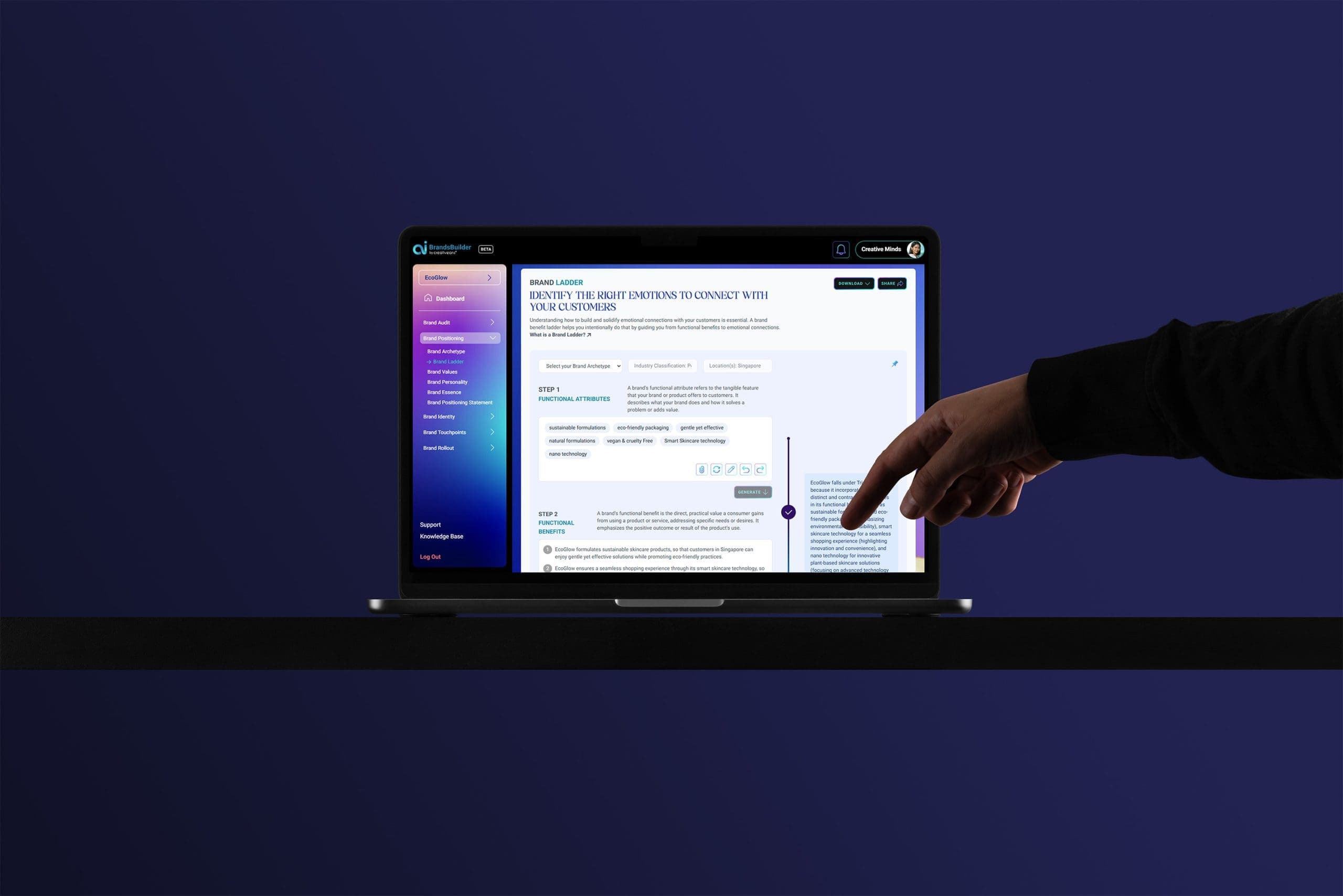
BrandsBuilder.ai streamlines every phase of branding, from strategy and positioning to identity creation and customer experience.

HOVARLAY

HOVARLAY transforms packaging and campaigns into powerful digital touchpoints. No apps. No reprints. No barriers.

Business Enquiry
info@creativeans.com
Career / Internship
collaborate@creativeans.com

Creativeans is an award-winning brand and design consultancy based in Singapore, Milan and Jakarta. We build brands that matter.

Singapore Registered Management Consultant © 2026 Creativeans Pte Ltd. All Rights Reserved