Inside Singapore’s AR Design Ecosystem: Collaboration Between Designers and Technologists
- UI/UX Design
Inside Singapore’s AR Design Ecosystem: Collaboration Between Designers and Technologists
Where Design Meets Technology
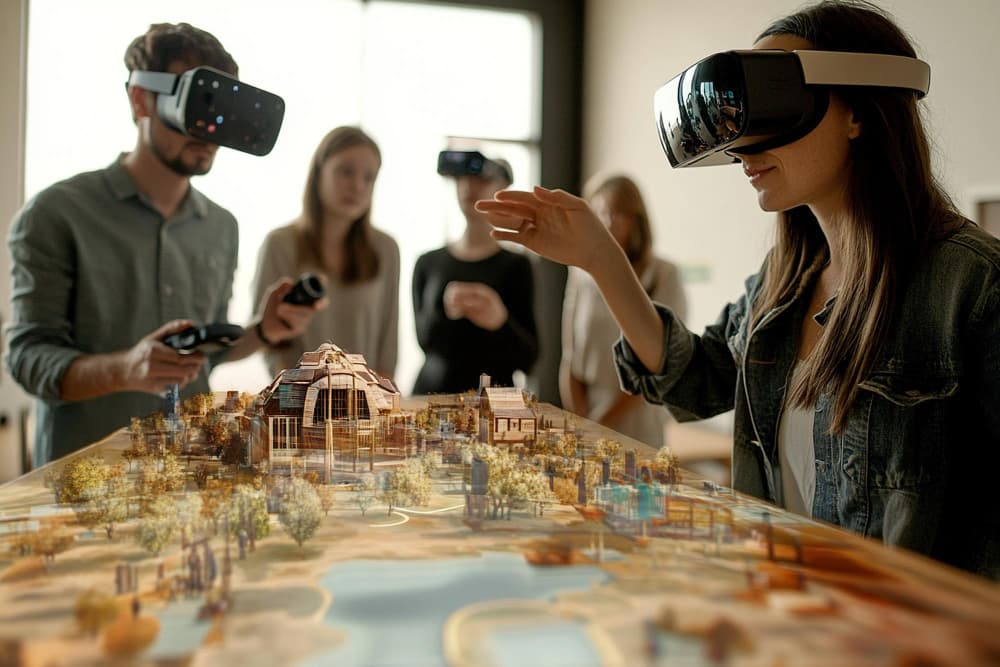
Augmented Reality sits at the intersection of creativity and technology. It is where storytelling, brand strategy, and engineering combine to create experiences that blend physical and digital spaces. Across Singapore, AR design is no longer a futuristic experiment. It has become a central component of how brands engage audiences, educate users, and differentiate themselves in competitive markets.
The nation’s well-developed infrastructure, high smartphone penetration, and design-forward culture have made it a fertile ground for AR innovation. Singapore’s ecosystem brings together design agencies, AR technologists, start-ups, and research institutions, all of whom collaborate to push the boundaries of what is possible.
This collaborative environment defines Singapore’s augmented reality design scene. Designers shape the look, feel, and purpose of AR experiences, while technologists translate creative ideas into functional systems. Agencies like Creativeans, platforms such as HOVARLAY, and research institutions like NUS and NTU all play unique yet interconnected roles. The result is an ecosystem where design thinking meets technical precision, producing experiences that are both beautiful and measurable.
The Players Powering AR in Singapore
Singapore’s AR design ecosystem can be visualised as a web of interdependent players: creative and design agencies, technology start-ups, hardware and IoT providers, academic partners, and government organisations. Each contributes to the growth of AR experiences that are human-centred, reliable, and scalable.
1. Creative and Design Agencies
Design agencies are the heart of the ecosystem. They translate business goals and brand values into engaging experiences by applying design principles, interaction design, and visual hierarchy to the AR medium. Their focus extends beyond aesthetics to how people actually experience and interpret digital content.
In this space, Creativeans exemplifies the integration of brand strategy with AR user experience and storytelling. The agency’s multidisciplinary teams specialise in packaging, communication, and experience design. They define the user journey, reduce cognitive load, and ensure each project maintains a consistent visual and emotional tone.
Creativeans uses its EDIT® Design Thinking framework (Empathise, Define, Ideate, Test) to understand audience behaviour and guide clients through an iterative process that ensures functionality, accessibility, and emotional engagement. This balance between form and usability is essential for effective AR usability and long-term impact.
2. AR Technology Platforms and Start-ups
If agencies are the storytellers, technology platforms are the builders. Start-ups and software firms provide the core AR technology, from computer vision and motion tracking to WebAR infrastructure and analytics.
A key example is HOVARLAY, a Singapore-based AR platform that converts printed materials into interactive WebAR experiences. It allows users to scan packaging, brochures, or posters using only a smartphone browser. This capability turns static media into living touchpoints that host videos, 3D animations, or real-time data.
HOVARLAY’s strength lies in simplifying complex development processes. Design agencies can focus on augmented reality UI and storytelling, while the platform manages hosting, device compatibility, and performance. This reduces friction between creative teams and engineers, enabling faster deployment and lower cost.
Other start-ups in the ecosystem specialise in AR commerce, 3D objects, virtual objects, and immersive experiences. Their innovations contribute to sectors like retail, tourism, education, and healthcare, ensuring AR remains a key driver of digital transformation across industries.
3. Hardware and IoT Partners
Hardware and IoT providers play a crucial role in spatial AR experiences. They create sensors, cameras, wearables, and projection systems that connect the digital layer to the physical world. These technologies are essential for spatial design and spatial interactions, allowing AR visuals to adapt accurately to real-world dimensions, surfaces, and lighting conditions.
In Singapore, IoT and hardware partners often collaborate with design agencies to ensure that AR experiences remain comfortable and intuitive. User comfort, user safety, and environmental awareness are central considerations in these partnerships. For example, AR installations in public venues must account for glare, physical space, and audience flow to maintain accessibility and engagement.
4. Academic and Research Institutions
Research institutions such as NUS, NTU, and SUTD contribute to the scientific backbone of Singapore’s AR development. Their work explores depth perception, contextual design, and user testing to enhance AR usability and overall human-computer interaction.
These universities frequently run joint programmes with creative agencies and start-ups, developing prototypes that merge research with real-world commercial applications. They also produce graduates who are fluent in both creative and technical disciplines, bridging gaps between AR UX design and programming.
Collaborative research projects have led to advancements in digital content optimisation, interaction design, and cultural considerations that help tailor AR experiences for Singapore’s diverse audience.
5. Government Support and Funding
Singapore’s government provides strong structural support for the AR industry. Agencies such as the Infocomm Media Development Authority (IMDA), Enterprise Singapore, and the DesignSingapore Council offer grants and pilot opportunities for businesses developing AR and related technologies.
Programmes like the Enterprise Development Grant (EDG) and the Productivity Solutions Grant (PSG) fund projects involving AR applications and AR technology adoption. These initiatives encourage collaboration between creative agencies and tech start-ups, helping them develop scalable AR solutions that support digital innovation and design excellence.
This combination of government backing, private-sector creativity, and academic expertise has made Singapore an ideal testbed for augmented reality design and cross-disciplinary experimentation.
How Collaboration Plays Out in Augmented Reality UX
The relationship between designers and technologists is collaborative rather than sequential. In Singapore’s ecosystem, AR projects are built on continuous communication and iteration.
Designers Define the Vision
Designers establish the foundation of the user experience. They visualise how people will move through the AR environment, when information should appear, and how interactions feel. This includes mapping user journeys, designing onboarding processes, and balancing cognitive load with clarity.
Good augmented reality UX ensures that users instinctively understand what to do, whether they are scanning a product package or exploring a digital exhibit. Design teams apply design guidelines and visual hierarchy to guide attention, while maintaining user comfort and inclusivity across devices.
Technologists Build the Framework
Technologists transform creative direction into working solutions. They integrate computer vision, optimise 3D assets, and manage cloud infrastructure for storing and streaming digital content. Their focus on stability, performance, and device compatibility ensures the experience runs smoothly on mobile networks and browsers.
In Singapore, engineers collaborate closely with designers to optimise AR interfaces, animation sequences, and spatial interactions. Continuous testing across lighting conditions and physical spaces ensures reliability in both retail and outdoor environments.
Agencies Coordinate Integration
Agencies such as Creativeans act as the connector between creative and technical teams. They ensure that the design concept aligns with the brand strategy while meeting usability and performance goals. This coordination results in AR experiences that look refined, perform efficiently, and deliver business results.
Creativeans also conducts user testing and feedback sessions, analysing engagement metrics to enhance performance over time. This iterative process embodies the best of augmented reality design, where creativity and functionality coexist seamlessly.
Local Singapore Examples of Collaboration
1. Retail AR Experiences
Singapore’s retail sector has embraced AR to attract and retain customers. Through partnerships between creative agencies and tech start-ups, stores now feature AR applications that allow customers to visualise products in 3D or unlock hidden promotions. The combination of interaction design and spatial design transforms shopping into a dynamic, personalised journey.
2. AR Packaging and Print
HOVARLAY is leading the movement in AR packaging. By integrating WebAR into printed materials, brands can deliver interactive content without the need for app downloads. Creative agencies handle the augmented reality UX design and storytelling, while HOVARLAY provides the technical foundation for AR usability, hosting, and analytics.
This collaboration demonstrates how the ecosystem works in harmony: designers focus on creative expression and usability, while technologists ensure stability, scalability, and cross-platform accessibility.
3. Events and Exhibitions
At major events, AR enhances storytelling and audience participation. Creativeans has collaborated with partners to design AR exhibits that combine 3D objects, motion graphics, and animation, resulting in memorable and educational experiences. These installations apply multimodal experience principles, integrating touch, sound, and visual feedback to engage users on multiple levels.
The Role of HOVARLAY: Bridging Print and WebAR for Agencies
HOVARLAY exemplifies Singapore’s collaborative spirit by connecting design innovation with technological simplicity. Its WebAR platform allows brands to create browser-based AR content without needing extensive technical development.
For agencies, this means the focus can remain on creativity, augmented reality UI, and storytelling. Designers craft virtual elements and brand narratives, while HOVARLAY manages technical performance, hosting, and compliance with regional data infrastructure standards.
The platform’s modular tools support designers who lack coding experience but want to create high-quality AR experiences quickly. By reducing barriers between design and development, HOVARLAY has become a crucial bridge in Singapore’s augmented reality design ecosystem.
Design-Tech Challenges and How Singapore Solves Them
While collaboration is Singapore’s strength, it also presents challenges that require structure and communication.
1. Bridging Language and Workflow Differences
Designers and engineers often use different terminologies and processes. Creative teams may prioritise aesthetics, while developers focus on logic and optimisation. Agencies like Creativeans overcome this by using interaction design documents, prototypes, and design guidelines that make expectations tangible for all parties.
2. Managing File Types and Performance
Large 3D objects and virtual objects can slow down performance if not optimised. Collaboration between design and technical teams focuses on balancing quality and efficiency, using compression methods that maintain fidelity while improving load times.
3. Testing Across Devices and Environments
AR content must perform consistently across devices, operating systems, and AR environments. Testing involves checking responsiveness, depth perception, lighting accuracy, and spatial interactions. Singapore’s agencies conduct extensive in-field trials to ensure optimal results across retail, exhibition, and outdoor conditions.
4. Ensuring Cloud and Data Infrastructure
Reliable AR technology depends on secure and scalable data storage. Platforms like HOVARLAY use regionally hosted servers that comply with data protection regulations. This infrastructure supports digital content hosting and analytics without compromising speed or security.
By solving these challenges collaboratively, Singapore’s ecosystem continues to deliver world-class augmented reality UX solutions that balance artistry with reliability.
Opportunities for Singapore’s AR Community
Cross-Disciplinary Labs and Innovation Hubs
Innovation hubs like IMDA’s PIXEL and the National Design Centre provide co-working spaces and prototyping labs for AR experimentation. Designers and technologists collaborate on prototypes that merge AR technology, storytelling, and usability testing.
AR Meet-Ups and Industry Events
Singapore hosts regular AR/VR meet-ups and hackathons that bring together developers, artists, and entrepreneurs. These events foster shared learning about AR interfaces, user testing, and new hardware integrations.
Government-Backed Grants and Programmes
Creative technology grants now fund both technical and creative aspects of AR, supporting AR applications that prioritise inclusivity and human-centred design.
Education and Talent Development
Universities are launching programmes that integrate coding, design thinking, and user experience principles. Students learn to manage cognitive load, apply spatial design, and test AR usability, ensuring Singapore maintains a skilled hybrid workforce.
Implications for Brands: Choosing Partners that Support Augmented Reality UI
Brands exploring AR should take advantage of Singapore’s integrated ecosystem. Collaboration between creative and technical partners ensures that both design excellence and engineering rigour are achieved.
1. Work with Agencies that Understand Technology
Select agencies that can translate your brand identity into a coherent UX for augmented reality. Firms like Creativeans maintain partnerships with AR platforms and developers, offering a seamless blend of storytelling, usability, and innovation.
2. Evaluate Platform Compatibility
When choosing a platform, confirm that it supports your creative workflow. WebAR systems like HOVARLAY provide easy interfaces for uploading and editing digital content, which allows designers to focus on creative direction without coding.
3. Prioritise Inclusivity and Usability
Ensure that experiences adhere to user comfort, user safety, and accessibility standards. A well-structured onboarding process and thoughtful contextual design reduce confusion and encourage repeated engagement.
4. Align Metrics with Brand Goals
Use analytics to measure user engagement, conversion rates, and repeat interactions. Continuous iteration based on these insights helps maintain relevance and strengthen brand loyalty.
Why the Ecosystem Approach Wins
Singapore’s success in AR design is built on collaboration. Designers bring empathy, creativity, and design principles, while technologists contribute AR technology, precision, and performance. Together they create AR experiences that engage audiences and elevate brands.
Agencies like Creativeans lead with human-centred design thinking, ensuring every project serves both artistic and business objectives. Platforms such as HOVARLAY simplify execution, bridging the technical gap and allowing creativity to flourish.
For brands, thriving in augmented reality means embracing this collaborative ecosystem. By leveraging Singapore’s network of designers, technologists, and innovators, companies can create meaningful, scalable, and sustainable experiences that embody the best of augmented reality design, augmented reality UX, and augmented reality UI.

Where Design Meets Technology
Augmented Reality sits at the intersection of creativity and technology. It is where storytelling, brand strategy, and engineering combine to create experiences that blend physical and digital spaces. Across Singapore, AR design is no longer a futuristic experiment. It has become a central component of how brands engage audiences, educate users, and differentiate themselves in competitive markets.
The nation’s well-developed infrastructure, high smartphone penetration, and design-forward culture have made it a fertile ground for AR innovation. Singapore’s ecosystem brings together design agencies, AR technologists, start-ups, and research institutions, all of whom collaborate to push the boundaries of what is possible.
This collaborative environment defines Singapore’s augmented reality design scene. Designers shape the look, feel, and purpose of AR experiences, while technologists translate creative ideas into functional systems. Agencies like Creativeans, platforms such as HOVARLAY, and research institutions like NUS and NTU all play unique yet interconnected roles. The result is an ecosystem where design thinking meets technical precision, producing experiences that are both beautiful and measurable.
The Players Powering AR in Singapore
Singapore’s AR design ecosystem can be visualised as a web of interdependent players: creative and design agencies, technology start-ups, hardware and IoT providers, academic partners, and government organisations. Each contributes to the growth of AR experiences that are human-centred, reliable, and scalable.
1. Creative and Design Agencies
Design agencies are the heart of the ecosystem. They translate business goals and brand values into engaging experiences by applying design principles, interaction design, and visual hierarchy to the AR medium. Their focus extends beyond aesthetics to how people actually experience and interpret digital content.
In this space, Creativeans exemplifies the integration of brand strategy with AR user experience and storytelling. The agency’s multidisciplinary teams specialise in packaging, communication, and experience design. They define the user journey, reduce cognitive load, and ensure each project maintains a consistent visual and emotional tone.
Creativeans uses its EDIT® Design Thinking framework (Empathise, Define, Ideate, Test) to understand audience behaviour and guide clients through an iterative process that ensures functionality, accessibility, and emotional engagement. This balance between form and usability is essential for effective AR usability and long-term impact.
2. AR Technology Platforms and Start-ups
If agencies are the storytellers, technology platforms are the builders. Start-ups and software firms provide the core AR technology, from computer vision and motion tracking to WebAR infrastructure and analytics.
A key example is HOVARLAY, a Singapore-based AR platform that converts printed materials into interactive WebAR experiences. It allows users to scan packaging, brochures, or posters using only a smartphone browser. This capability turns static media into living touchpoints that host videos, 3D animations, or real-time data.
HOVARLAY’s strength lies in simplifying complex development processes. Design agencies can focus on augmented reality UI and storytelling, while the platform manages hosting, device compatibility, and performance. This reduces friction between creative teams and engineers, enabling faster deployment and lower cost.
Other start-ups in the ecosystem specialise in AR commerce, 3D objects, virtual objects, and immersive experiences. Their innovations contribute to sectors like retail, tourism, education, and healthcare, ensuring AR remains a key driver of digital transformation across industries.
3. Hardware and IoT Partners
Hardware and IoT providers play a crucial role in spatial AR experiences. They create sensors, cameras, wearables, and projection systems that connect the digital layer to the physical world. These technologies are essential for spatial design and spatial interactions, allowing AR visuals to adapt accurately to real-world dimensions, surfaces, and lighting conditions.
In Singapore, IoT and hardware partners often collaborate with design agencies to ensure that AR experiences remain comfortable and intuitive. User comfort, user safety, and environmental awareness are central considerations in these partnerships. For example, AR installations in public venues must account for glare, physical space, and audience flow to maintain accessibility and engagement.
4. Academic and Research Institutions
Research institutions such as NUS, NTU, and SUTD contribute to the scientific backbone of Singapore’s AR development. Their work explores depth perception, contextual design, and user testing to enhance AR usability and overall human-computer interaction.
These universities frequently run joint programmes with creative agencies and start-ups, developing prototypes that merge research with real-world commercial applications. They also produce graduates who are fluent in both creative and technical disciplines, bridging gaps between AR UX design and programming.
Collaborative research projects have led to advancements in digital content optimisation, interaction design, and cultural considerations that help tailor AR experiences for Singapore’s diverse audience.
5. Government Support and Funding
Singapore’s government provides strong structural support for the AR industry. Agencies such as the Infocomm Media Development Authority (IMDA), Enterprise Singapore, and the DesignSingapore Council offer grants and pilot opportunities for businesses developing AR and related technologies.
Programmes like the Enterprise Development Grant (EDG) and the Productivity Solutions Grant (PSG) fund projects involving AR applications and AR technology adoption. These initiatives encourage collaboration between creative agencies and tech start-ups, helping them develop scalable AR solutions that support digital innovation and design excellence.
This combination of government backing, private-sector creativity, and academic expertise has made Singapore an ideal testbed for augmented reality design and cross-disciplinary experimentation.
How Collaboration Plays Out in Augmented Reality UX
The relationship between designers and technologists is collaborative rather than sequential. In Singapore’s ecosystem, AR projects are built on continuous communication and iteration.
Designers Define the Vision
Designers establish the foundation of the user experience. They visualise how people will move through the AR environment, when information should appear, and how interactions feel. This includes mapping user journeys, designing onboarding processes, and balancing cognitive load with clarity.
Good augmented reality UX ensures that users instinctively understand what to do, whether they are scanning a product package or exploring a digital exhibit. Design teams apply design guidelines and visual hierarchy to guide attention, while maintaining user comfort and inclusivity across devices.
Technologists Build the Framework
Technologists transform creative direction into working solutions. They integrate computer vision, optimise 3D assets, and manage cloud infrastructure for storing and streaming digital content. Their focus on stability, performance, and device compatibility ensures the experience runs smoothly on mobile networks and browsers.
In Singapore, engineers collaborate closely with designers to optimise AR interfaces, animation sequences, and spatial interactions. Continuous testing across lighting conditions and physical spaces ensures reliability in both retail and outdoor environments.
Agencies Coordinate Integration
Agencies such as Creativeans act as the connector between creative and technical teams. They ensure that the design concept aligns with the brand strategy while meeting usability and performance goals. This coordination results in AR experiences that look refined, perform efficiently, and deliver business results.
Creativeans also conducts user testing and feedback sessions, analysing engagement metrics to enhance performance over time. This iterative process embodies the best of augmented reality design, where creativity and functionality coexist seamlessly.
Local Singapore Examples of Collaboration
1. Retail AR Experiences
Singapore’s retail sector has embraced AR to attract and retain customers. Through partnerships between creative agencies and tech start-ups, stores now feature AR applications that allow customers to visualise products in 3D or unlock hidden promotions. The combination of interaction design and spatial design transforms shopping into a dynamic, personalised journey.
2. AR Packaging and Print
HOVARLAY is leading the movement in AR packaging. By integrating WebAR into printed materials, brands can deliver interactive content without the need for app downloads. Creative agencies handle the augmented reality UX design and storytelling, while HOVARLAY provides the technical foundation for AR usability, hosting, and analytics.
This collaboration demonstrates how the ecosystem works in harmony: designers focus on creative expression and usability, while technologists ensure stability, scalability, and cross-platform accessibility.
3. Events and Exhibitions
At major events, AR enhances storytelling and audience participation. Creativeans has collaborated with partners to design AR exhibits that combine 3D objects, motion graphics, and animation, resulting in memorable and educational experiences. These installations apply multimodal experience principles, integrating touch, sound, and visual feedback to engage users on multiple levels.
The Role of HOVARLAY: Bridging Print and WebAR for Agencies
HOVARLAY exemplifies Singapore’s collaborative spirit by connecting design innovation with technological simplicity. Its WebAR platform allows brands to create browser-based AR content without needing extensive technical development.
For agencies, this means the focus can remain on creativity, augmented reality UI, and storytelling. Designers craft virtual elements and brand narratives, while HOVARLAY manages technical performance, hosting, and compliance with regional data infrastructure standards.
The platform’s modular tools support designers who lack coding experience but want to create high-quality AR experiences quickly. By reducing barriers between design and development, HOVARLAY has become a crucial bridge in Singapore’s augmented reality design ecosystem.
Design-Tech Challenges and How Singapore Solves Them
While collaboration is Singapore’s strength, it also presents challenges that require structure and communication.
1. Bridging Language and Workflow Differences
Designers and engineers often use different terminologies and processes. Creative teams may prioritise aesthetics, while developers focus on logic and optimisation. Agencies like Creativeans overcome this by using interaction design documents, prototypes, and design guidelines that make expectations tangible for all parties.
2. Managing File Types and Performance
Large 3D objects and virtual objects can slow down performance if not optimised. Collaboration between design and technical teams focuses on balancing quality and efficiency, using compression methods that maintain fidelity while improving load times.
3. Testing Across Devices and Environments
AR content must perform consistently across devices, operating systems, and AR environments. Testing involves checking responsiveness, depth perception, lighting accuracy, and spatial interactions. Singapore’s agencies conduct extensive in-field trials to ensure optimal results across retail, exhibition, and outdoor conditions.
4. Ensuring Cloud and Data Infrastructure
Reliable AR technology depends on secure and scalable data storage. Platforms like HOVARLAY use regionally hosted servers that comply with data protection regulations. This infrastructure supports digital content hosting and analytics without compromising speed or security.
By solving these challenges collaboratively, Singapore’s ecosystem continues to deliver world-class augmented reality UX solutions that balance artistry with reliability.
Opportunities for Singapore’s AR Community
Cross-Disciplinary Labs and Innovation Hubs
Innovation hubs like IMDA’s PIXEL and the National Design Centre provide co-working spaces and prototyping labs for AR experimentation. Designers and technologists collaborate on prototypes that merge AR technology, storytelling, and usability testing.
AR Meet-Ups and Industry Events
Singapore hosts regular AR/VR meet-ups and hackathons that bring together developers, artists, and entrepreneurs. These events foster shared learning about AR interfaces, user testing, and new hardware integrations.
Government-Backed Grants and Programmes
Creative technology grants now fund both technical and creative aspects of AR, supporting AR applications that prioritise inclusivity and human-centred design.
Education and Talent Development
Universities are launching programmes that integrate coding, design thinking, and user experience principles. Students learn to manage cognitive load, apply spatial design, and test AR usability, ensuring Singapore maintains a skilled hybrid workforce.
Implications for Brands: Choosing Partners that Support Augmented Reality UI
Brands exploring AR should take advantage of Singapore’s integrated ecosystem. Collaboration between creative and technical partners ensures that both design excellence and engineering rigour are achieved.
1. Work with Agencies that Understand Technology
Select agencies that can translate your brand identity into a coherent UX for augmented reality. Firms like Creativeans maintain partnerships with AR platforms and developers, offering a seamless blend of storytelling, usability, and innovation.
2. Evaluate Platform Compatibility
When choosing a platform, confirm that it supports your creative workflow. WebAR systems like HOVARLAY provide easy interfaces for uploading and editing digital content, which allows designers to focus on creative direction without coding.
3. Prioritise Inclusivity and Usability
Ensure that experiences adhere to user comfort, user safety, and accessibility standards. A well-structured onboarding process and thoughtful contextual design reduce confusion and encourage repeated engagement.
4. Align Metrics with Brand Goals
Use analytics to measure user engagement, conversion rates, and repeat interactions. Continuous iteration based on these insights helps maintain relevance and strengthen brand loyalty.
Why the Ecosystem Approach Wins
Singapore’s success in AR design is built on collaboration. Designers bring empathy, creativity, and design principles, while technologists contribute AR technology, precision, and performance. Together they create AR experiences that engage audiences and elevate brands.
Agencies like Creativeans lead with human-centred design thinking, ensuring every project serves both artistic and business objectives. Platforms such as HOVARLAY simplify execution, bridging the technical gap and allowing creativity to flourish.
For brands, thriving in augmented reality means embracing this collaborative ecosystem. By leveraging Singapore’s network of designers, technologists, and innovators, companies can create meaningful, scalable, and sustainable experiences that embody the best of augmented reality design, augmented reality UX, and augmented reality UI.

YOU MIGHT ALSO LIKE
Top Consulting Companies in Indonesia
- Branding
- Marketing
- Creative Investment
Yulia Saksen
International Brand Consultant and Co-Founder of Creativeans
Your brand might look great. But is it working?
Discover what’s missing in your brand strategy and how a few changes can grow your business.
You want to do a brand revamp? Now what?
We’ll help you understand what’s needed, what works, and how to make your company look great.