How CPG brands can win customers through immersive packaging technology
- Marketing
- Packaging Design
- Consumer Goods & Services
- Creative Investment
- Packaging Design
How CPG brands can win customers through immersive packaging technology
When I walk through a supermarket aisle, I see the same pattern. Many brands are talking. Few are heard. For consumer packaged goods (CPG) brands, the critical moment isn’t the ad or the promotion. It’s the small pause when someone picks up your packaging and decides yes or no. Immersive packaging technology can transform what happens in that moment.
CPG’s Hidden Challenge: When Good Packaging Stops Working
Many CPG brands are stuck in constant price battles. Private labels are improving in quality while staying cheaper. In snacks and beverages, some global brands have been accused of “shrinkflation”, smaller packaging at the same price. Once customers feel they’re getting less for more, every promotion starts to look like a trick.
But there’s a deeper issue most brands don’t expect: a beautiful packaging may no longer be enough.
A counterintuitive truth is emerging:
Packaging can be too polished to be trusted.
Customers worry that perfect visuals hide imperfect practices. Instead of confidence, hyper-refined packaging sometimes creates distance.
This is why sustainability claims printed on packaging are now heavily scrutinized. Certifications, icons, and green slogans once reassured shoppers, today they trigger more questions than answers. People want to see the proof behind the promise, not just the promise.
The New Shopper: Digital-First Even in Physical Stores
Today’s shoppers behave differently at the shelf. They use their phones to compare prices, check ingredients, and look for reviews. Packaging is no longer just a brand canvas, it’s the last mile of the decision.
Younger consumers are also accustomed to interactive layers in daily life. Filters, mini-games, and instant information feel natural. Pointing a camera at something to learn more is already second nature.
And across food, beverage, and personal care, expectations for transparency are rising. Customers want honest, simple answers to three questions:
- What’s in this product?
- Where does it come from?
- What impact does it have?
Brands that can answer these questions at the exact moment of choice stand out.
Why Packaging Is Becoming the New Front Door for XR
Extended reality (XR) may sound futuristic, but it’s already part of everyday behaviour. People virtually try on shoes, place furniture in their homes, or watch content appear on their coffee table via their phone.
The XR market is projected to grow from USD 24B in 2024 to about USD 85B by 2029. Tech giants are accelerating the shift, from Ray-Ban Meta smart glasses to devices like Apple Vision Pro, slowly layering digital experiences onto the physical world.
Here’s the unexpected part:
Most customers won’t enter XR through headsets. They’ll enter through your packaging.
A smartphone + a product already in someone’s home = the easiest entry point.
Your packaging is already present in kitchens, bathroom counters, and office pantries, the places where decisions and habits form.
A Real Example: When a Cereal Box Outperforms a TV Ad
An FMCG team recently tested two campaign assets:
- a traditional 15-second digital spot, and
- a simple interactive AR story triggered by scanning the cereal box.
The AR piece, which took a fraction of the budget, delivered 3x longer engagement and double the voluntary brand recall.
It didn’t go viral. It didn’t need to.
It worked because it appeared at the exact moment of truth: breakfast, in the customer’s hand.
This is the shift CPG brands often underestimate.
What Immersive Packaging Looks Like (and How to Build It Fast)
The good news: brands don’t need to build complex systems from scratch. The technology already exists, the opportunity lies in crafting the right experience.
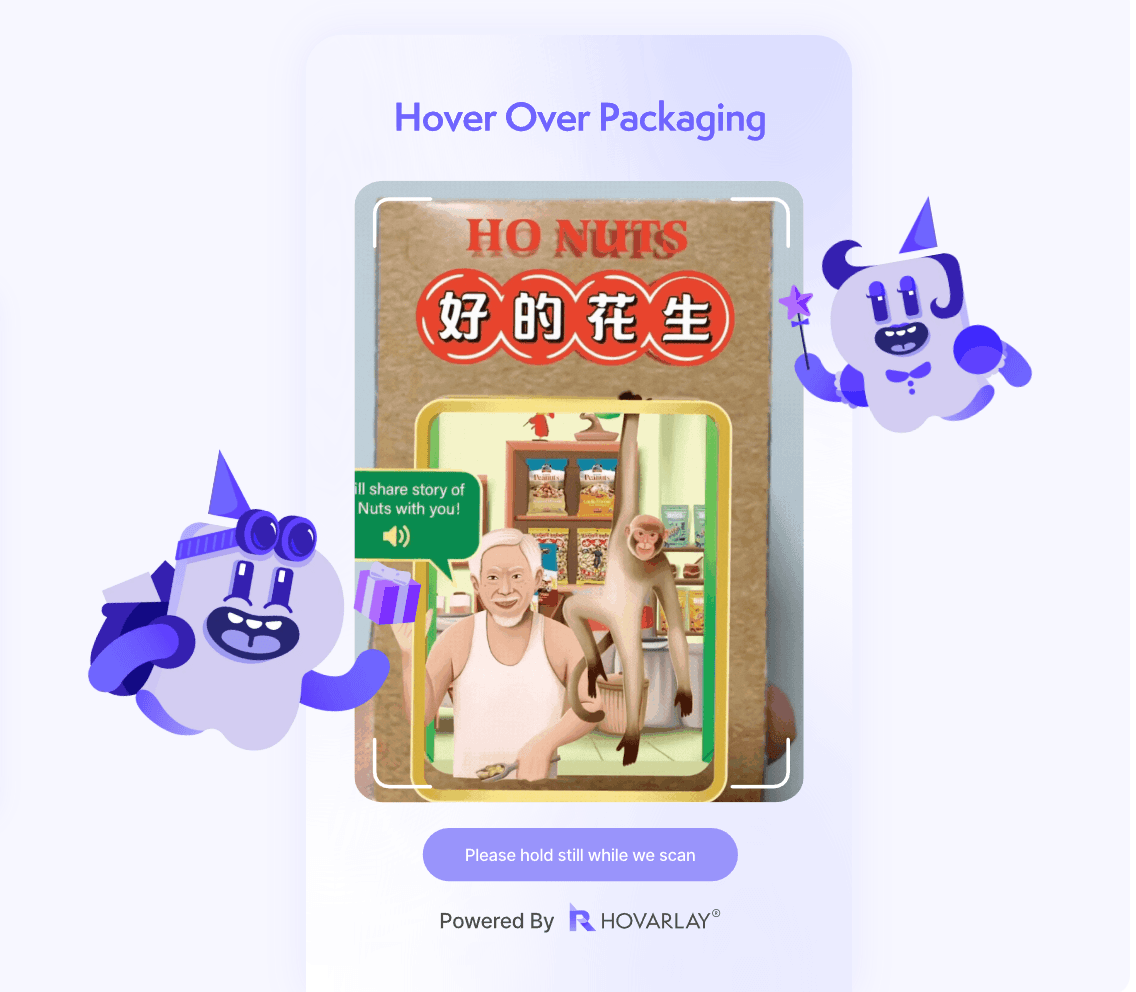
A practical approach is web-based augmented reality, where a shopper scans the packaging and an experience opens directly in the browser. No app download. No friction.
Today, platforms allow teams to create short product stories, sustainability explainers, try-ons, guides, or simple interactive content linked to specific SKUs, without engineering support. Tools such as HOVARLAY, among others in the market, enable brand and marketing teams to launch AR packaging experiences without writing code or rebuilding their tech stack.
For the shopper, it’s intuitive: scan → learn → connect.
For the brand, it turns packaging from a static cost into a flexible, updateable touch point that yields behavioural data and regional insights.
Why CPG Brands Should Act Now
Immersive packaging is shifting from experiment to expectation. Retailers want richer engagement at the shelf. Shoppers expect more transparency and interactivity. And the tools are ready for real-world, scalable use.
Packaging has always been the most intimate brand asset. It’s the one piece guaranteed to touch the customer’s hand. When that moment becomes interactive, informative, surprising, or emotionally resonant, brands earn more than visibility.
They earn trust.
They earn loyalty.
They earn a relationship that goes far beyond a single purchase.
Brands that move early won’t just stand out on the shelf, they’ll redefine what the shelf means.

When I walk through a supermarket aisle, I see the same pattern. Many brands are talking. Few are heard. For consumer packaged goods (CPG) brands, the critical moment isn’t the ad or the promotion. It’s the small pause when someone picks up your packaging and decides yes or no. Immersive packaging technology can transform what happens in that moment.
CPG’s Hidden Challenge: When Good Packaging Stops Working
Many CPG brands are stuck in constant price battles. Private labels are improving in quality while staying cheaper. In snacks and beverages, some global brands have been accused of “shrinkflation”, smaller packaging at the same price. Once customers feel they’re getting less for more, every promotion starts to look like a trick.
But there’s a deeper issue most brands don’t expect: a beautiful packaging may no longer be enough.
A counterintuitive truth is emerging:
Packaging can be too polished to be trusted.
Customers worry that perfect visuals hide imperfect practices. Instead of confidence, hyper-refined packaging sometimes creates distance.
This is why sustainability claims printed on packaging are now heavily scrutinized. Certifications, icons, and green slogans once reassured shoppers, today they trigger more questions than answers. People want to see the proof behind the promise, not just the promise.
The New Shopper: Digital-First Even in Physical Stores
Today’s shoppers behave differently at the shelf. They use their phones to compare prices, check ingredients, and look for reviews. Packaging is no longer just a brand canvas, it’s the last mile of the decision.
Younger consumers are also accustomed to interactive layers in daily life. Filters, mini-games, and instant information feel natural. Pointing a camera at something to learn more is already second nature.
And across food, beverage, and personal care, expectations for transparency are rising. Customers want honest, simple answers to three questions:
- What’s in this product?
- Where does it come from?
- What impact does it have?
Brands that can answer these questions at the exact moment of choice stand out.
Why Packaging Is Becoming the New Front Door for XR
Extended reality (XR) may sound futuristic, but it’s already part of everyday behaviour. People virtually try on shoes, place furniture in their homes, or watch content appear on their coffee table via their phone.
The XR market is projected to grow from USD 24B in 2024 to about USD 85B by 2029. Tech giants are accelerating the shift, from Ray-Ban Meta smart glasses to devices like Apple Vision Pro, slowly layering digital experiences onto the physical world.
Here’s the unexpected part:
Most customers won’t enter XR through headsets. They’ll enter through your packaging.
A smartphone + a product already in someone’s home = the easiest entry point.
Your packaging is already present in kitchens, bathroom counters, and office pantries, the places where decisions and habits form.
A Real Example: When a Cereal Box Outperforms a TV Ad
An FMCG team recently tested two campaign assets:
- a traditional 15-second digital spot, and
- a simple interactive AR story triggered by scanning the cereal box.
The AR piece, which took a fraction of the budget, delivered 3x longer engagement and double the voluntary brand recall.
It didn’t go viral. It didn’t need to.
It worked because it appeared at the exact moment of truth: breakfast, in the customer’s hand.
This is the shift CPG brands often underestimate.
What Immersive Packaging Looks Like (and How to Build It Fast)
The good news: brands don’t need to build complex systems from scratch. The technology already exists, the opportunity lies in crafting the right experience.
A practical approach is web-based augmented reality, where a shopper scans the packaging and an experience opens directly in the browser. No app download. No friction.
Today, platforms allow teams to create short product stories, sustainability explainers, try-ons, guides, or simple interactive content linked to specific SKUs, without engineering support. Tools such as HOVARLAY, among others in the market, enable brand and marketing teams to launch AR packaging experiences without writing code or rebuilding their tech stack.
For the shopper, it’s intuitive: scan → learn → connect.
For the brand, it turns packaging from a static cost into a flexible, updateable touch point that yields behavioural data and regional insights.
Why CPG Brands Should Act Now
Immersive packaging is shifting from experiment to expectation. Retailers want richer engagement at the shelf. Shoppers expect more transparency and interactivity. And the tools are ready for real-world, scalable use.
Packaging has always been the most intimate brand asset. It’s the one piece guaranteed to touch the customer’s hand. When that moment becomes interactive, informative, surprising, or emotionally resonant, brands earn more than visibility.
They earn trust.
They earn loyalty.
They earn a relationship that goes far beyond a single purchase.
Brands that move early won’t just stand out on the shelf, they’ll redefine what the shelf means.

YOU MIGHT ALSO LIKE
AI Consulting Services in Singapore: Transforming Businesses with Innovation
- Branding
- Marketing
- Creative Investment
- Technology
How to Create Customer Journey Maps That Actually Drive Results (Step-by-Step Guide)
- Marketing
- Branding
- Creative Investment
- Experience Design
- UI/UX Design
- Creative Tool
- Communication Design
Singapore’s UX Design Evolution: Trends to Adopt in 2024
- Branding
- Business Design
- UI/UX Design
- Packaging Design
- Communication Design
Yulia Saksen
International Brand Consultant and Co-Founder of Creativeans
Your brand might look great. But is it working?
Discover what’s missing in your brand strategy and how a few changes can grow your business.
You want to do a brand revamp? Now what?
We’ll help you understand what’s needed, what works, and how to make your company look great.