BACK TO
RESOURCES

AR as the Future of User Experience in Singapore

  • Experience Design
  • UI/UX Design
AR as the Future of User Experience in Singapore

AR as the Future of User Experience in Singapore

Why Creativeans Sees AR as a High-Potential Growth Area

Augmented Reality is no longer an experimental add-on; it is rapidly becoming the future of how people interact with information and brands. What began as a novelty in gaming and entertainment has evolved into a mainstream interface for learning, shopping, and storytelling. Across industries, augmented reality design is changing expectations of what digital experiences can do.

In Singapore, the transformation is particularly visible. A nation built on innovation, connectivity, and design thinking, Singapore’s consumers are ready for experiences that go beyond the screen. The city’s advanced infrastructure, high smartphone penetration, and strong culture of digital experimentation make it a natural testbed for AR technology.

At Creativeans, we see AR as a high-potential growth area not just because of its technical novelty, but because it allows brands to communicate with authenticity and precision. AR is a bridge between the physical and digital — between the product in your hand and the story behind it. It can simplify complex information, extend engagement, and help audiences remember not just what they saw, but how they felt.

Our goal with every AR design service in Singapore is to combine strategy, creativity, and usability so that AR becomes an effortless part of everyday life. We apply design thinking to make augmented reality UX and augmented reality UI meaningful, accessible, and emotionally resonant. The result is not a digital gimmick, but a new form of human-centred interaction.

The Rise of AR Experiences in Everyday Life

For many Singaporeans, AR is already part of daily routines — even if they don’t realise it. The following examples demonstrate how intuitive design for augmented reality has quietly shaped modern behaviour.

1. Social Filters and Effects

Social media platforms like Instagram, Snapchat, and TikTok have normalised AR through filters and effects. These overlays respond in real time to facial movements and gestures, a direct application of computer vision and interaction design. What makes these experiences successful is not their technology alone, but their simplicity: easy onboarding, low cognitive load, and clear visual feedback.

These examples show the value of augmented reality UX done well — seamless, intuitive, and fun.

2. Virtual Try-Ons and Shopping

Retail brands use ar applications to let customers try on accessories, makeup, or apparel virtually. The augmented reality UI shows products at scale with accurate colour and lighting, while device compatibility ensures performance across different phones. These experiences not only drive conversion but also build confidence, reducing product returns and uncertainty.

3. Product Visualisation at Home

Homeware and furniture retailers use AR to show how products fit into real spaces. Customers can place 3D objects in their room, rotate them, and test finishes. The spatial design ensures that virtual elements align correctly with physical surfaces. For consumers, it feels like having a design consultant at home.

4. Cultural and Educational Experiences

Museums and tourism sites across Singapore are incorporating AR storytelling to enhance engagement. Visitors can scan artefacts to reveal immersive experiences such as animated histories or audio tours. By merging visual hierarchy and contextual design, these projects make learning dynamic and inclusive for multilingual audiences.

Each of these examples demonstrates that AR is not a futuristic promise — it is already an established design language. People value AR because it delivers clarity, creativity, and delight when implemented through thoughtful user experience and visual design principles.

How AR UX Differs from Traditional UX

Designing for AR requires a fundamental shift from screen-based design to spatial thinking. Traditional UX focuses on flat surfaces and predictable environments; augmented reality UX design deals with 3D space, motion, and the unpredictability of the physical world.

1. Depth, Motion, and Perception

In AR, users move around content rather than scrolling through it. This means designers must account for depth perception, viewing angles, and physical space. Layouts are defined not by pixels, but by distance and perspective.

2. Real-World Context and Safety

AR experiences unfold in public or semi-public environments. Designers must consider user safety, comfort, and environmental awareness. A well-executed AR experience guides users without distracting them from their surroundings.

3. Cognitive Load and Clarity

Good augmented reality UX reduces information overload. Because users can only process a limited amount of information while interacting with the physical world, clear sequencing and hierarchy are essential. Designers use progressive hints, consistent icons, and simple gestures to maintain flow.

4. Emotional Engagement

Unlike static interfaces, AR triggers sensory and emotional responses. Visuals, motion, and sound combine to create immersive experiences that evoke curiosity and wonder. Designers must orchestrate these layers intentionally to achieve emotional impact without overwhelming the user.

At Creativeans, we approach AR UX with empathy and precision. Our process begins with user journey mapping, continues through interaction design prototyping, and ends with real-world user testing to ensure usability, safety, and comfort.

The Role of Augmented Reality UI in Guiding Attention

While UX defines the overall journey, augmented reality UI focuses on the surface details that guide interaction. In AR, interfaces must feel both digital and tangible. Users should understand what to do next through visual cues, not long instructions.

Designing for Intuition

An AR interface should communicate purpose immediately. Buttons and icons must remain legible under different lighting conditions. Visual hierarchy helps users prioritise actions, while contrast ensures readability against complex backgrounds.

Designing for Accessibility

Good AR UI is inclusive. Text size, motion pacing, and voice commands can make a huge difference in accessibility. For multilingual environments like Singapore, localisation and cultural considerations matter too.

Designing for Context

AR interfaces must respect the physical space they inhabit. Too many virtual elements can obscure real-world visibility, while too few may fail to provide guidance. Achieving this balance requires sensitivity to context and environment.

Continuous Improvement

Our team regularly evaluates AR usability metrics such as dwell time, error rate, and task completion. We test across different devices and lighting conditions to ensure consistent quality. Every refinement strengthens trust between user and brand.

Inside the Creativeans AR Design Process

Our design methodology for AR combines creativity, technical rigour, and strategy. Whether for retail, packaging, or education, every augmented reality design project follows a structured framework.

1. Research and Strategy

We begin by defining the business and user objectives. What challenge does AR solve? How does it complement the existing brand ecosystem? Insights from interviews, observations, and environmental analysis inform our concept development.

2. Concept and Ideation

Using our EDIT® framework — Empathise, Define, Ideate, and Test — we generate concepts grounded in user behaviour. We visualise user journeys, define touchpoints, and prototype interactions.

3. Spatial and Interaction Design

Here, the focus shifts to spatial design and interaction design. We choreograph movement, positioning, and transitions within the AR environment. Our goal is to create AR experiences that feel intuitive, stable, and emotionally engaging.

4. Interface and Visual Systems

Our UI designers translate concepts into cohesive visual systems. Consistent icons, colours, and typography ensure brand alignment. By adhering to strong design principles, we maintain both beauty and functionality.

5. Prototyping and Testing

Every project undergoes iterative user testing. We assess cognitive load, user comfort, and device compatibility under real conditions — from bright retail lighting to quiet gallery spaces. This process uncovers opportunities to simplify and enhance.

6. Deployment and Analytics

The final stage involves AR technology integration, quality assurance, and analytics tracking. Our designers collaborate with engineers to optimise load times and virtual elements, ensuring performance stability across platforms.

Real-World Applications by Creativeans

Packaging That Speaks

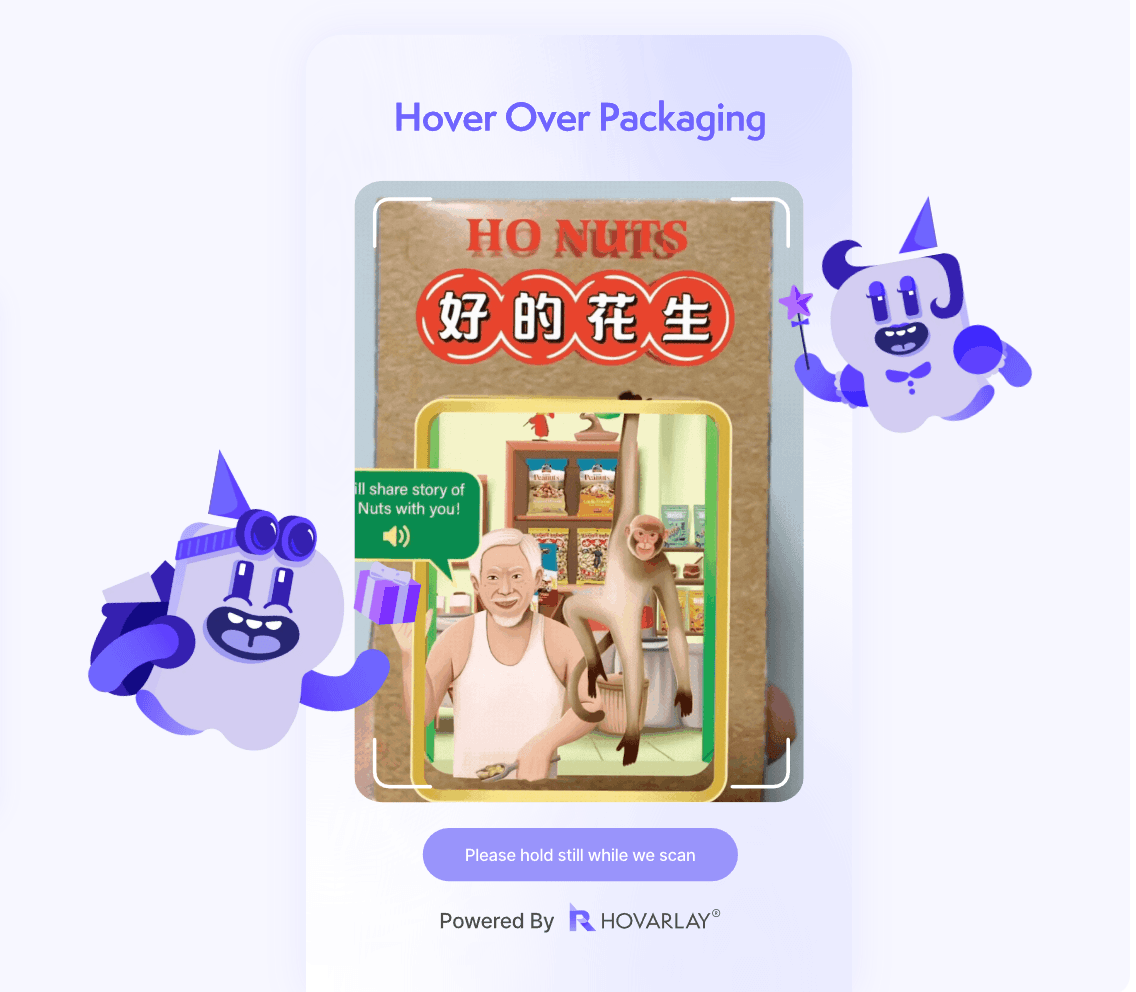
A premium skincare brand wanted to turn its packaging into a storytelling medium. Creativeans designed a scan-to-experience journey that revealed ingredient sourcing, sustainability efforts, and application tutorials.
The augmented reality UX guided users through minimal gestures, while the augmented reality UI presented clear icons and progress markers. The project demonstrated how ux design for AR can turn a passive product into an active engagement channel.

Retail Experiences That Simplify Choice

For a pop-up exhibition, we built an interactive retail display that allowed visitors to explore product features through their smartphones. 3D objects appeared over shelves to explain materials and usage. The design balanced AR applications and storytelling, making product exploration effortless.

Learning Through Immersion

In a cultural project, we designed an educational AR trail that overlays stories on heritage buildings. Each checkpoint uses AR environments to link history, architecture, and people. The experience integrates virtual objects, sound, and animation to evoke emotion while keeping navigation intuitive.

HOVARLAY: A Platform That Makes WebAR Scalable

To scale our creative intent into accessible technology, Creativeans works with selected partners in the Singapore AR ecosystem. One of them is HOVARLAY, a WebAR platform that simplifies deployment across packaging, retail, and exhibitions.

HOVARLAY enables browser-based AR applications, eliminating the need for dedicated app downloads. Users scan a code or image and instantly experience content in their mobile browsers. This supports cross-platform compatibility and fast time-to-market — vital in today’s retail cycles.

The platform aligns with our design-first philosophy by giving Creativeans control over creative direction, digital content, and analytics. Its AR technology backend manages hosting, tracking, and updates, while our designers focus on storytelling and interface quality.

Whether a project involves packaging activation, event storytelling, or product demonstration, HOVARLAY provides a robust foundation for augmented reality UX and augmented reality UI design that can scale efficiently.

What Brands Should Expect from an Augmented Reality Design Service in Singapore

When evaluating an AR partner, brands should look for design maturity, cultural awareness, and technical reliability. The following principles reflect Creativeans’ approach and serve as a checklist for selecting a capable AR design service Singapore.

  1. Strategic Purpose
    Define why AR is being used. Align it with measurable goals like engagement, conversion, or education.
  2. Human-Centred Design
    Focus on empathy and accessibility. Effective ux for augmented reality addresses diverse audiences and environments.
  3. Systematic Design Principles
    Follow structured design guidelines that ensure consistency across scenes, icons, and motion systems.
  4. Testing in Real Environments
    Simulate actual use conditions. Lighting, crowd density, and environmental awareness directly affect AR usability.
  5. Performance and Stability
    Prioritise responsive AR technology and device compatibility. A stable experience earns trust.
  6. Scalability
    Build modular systems for future expansion. WebAR tools like HOVARLAY make iterative updates efficient.
  7. Analytics and Learning
    Measure interactions and dwell time to refine user journeys. This feedback loop is central to our interaction design process.

How AR Enhances Emotional Connection and Brand Recall

People remember experiences, not advertisements. AR bridges logic and emotion by letting audiences participate in brand stories. When users interact with virtual elements in real-world settings, they form stronger memories.

Research on user engagement shows that active exploration increases brand recall and satisfaction. This is why design for augmented reality emphasises personal agency — inviting people to act, not just observe.

Creativeans applies this insight to create meaningful connections. For example, a museum visitor might scan an artefact to reveal an animated story that continues on their phone later. The design preserves emotional flow across AR experiences, channels, and devices.

Trends Shaping the Future of AR in Singapore

The next chapter of AR design in Singapore is defined by convergence — between industries, technologies, and cultures.

1. Spatial Computing and Persistent Layers

As AR platforms evolve, spatial interactions will become permanent fixtures in physical venues. Retail and education spaces will maintain live digital overlays that update dynamically.

2. AI and Predictive Design

Machine learning will enable adaptive AR interfaces that respond to user behaviour in real time, enhancing user comfort and efficiency.

3. Multimodal Experiences

Future AR systems will integrate touch, sound, and motion for richer multimodal experiences. Designers will choreograph these sensory layers into cohesive narratives.

4. Sustainability and Digital Twins

AR will reduce material waste by turning printed media into digital layers. With digital transformation advancing, physical prototypes and manuals will evolve into interactive guides accessible anywhere.

5. Inclusivity and Cultural Relevance

In Singapore’s multicultural context, AR offers a new way to design experiences that transcend language. Cultural considerations and localisation will define the next generation of accessible AR storytelling.

Why Singapore Is Uniquely Positioned to Lead

Singapore’s mix of design talent, technological infrastructure, and supportive policy environment makes it one of Asia’s strongest markets for AR innovation. The presence of forward-thinking agencies, global technology partners, and universities exploring AR technology research creates a complete ecosystem.

Creativeans contributes to this ecosystem by connecting design strategy with emerging technologies. Our work with partners like HOVARLAY demonstrates how creative-tech collaboration can turn abstract innovation into scalable experiences.

As brands pursue digital transformation, Singapore will continue to pioneer AR implementations that combine functionality, artistry, and cultural sensitivity.

Designing Tomorrow’s Reality Today

Augmented Reality is reshaping how humans engage with information, brands, and each other. For Singapore, a nation that thrives on innovation, augmented reality design represents not just a creative frontier but a competitive advantage.

At Creativeans, we believe that AR’s future lies in design — in empathy, clarity, and usability. From augmented reality UX to augmented reality UI, every interaction is an opportunity to make technology feel more human.

Through our collaborations and strategic use of platforms like HOVARLAY, we help brands bring imagination to life while ensuring accessibility, scalability, and measurable results.

The next stage of design in Singapore will not be about screens, but about experiences that exist everywhere around us. With thoughtful strategy and artistry, AR will move from novelty to necessity — and Creativeans will be there to design what comes next.


Why Creativeans Sees AR as a High-Potential Growth Area

Augmented Reality is no longer an experimental add-on; it is rapidly becoming the future of how people interact with information and brands. What began as a novelty in gaming and entertainment has evolved into a mainstream interface for learning, shopping, and storytelling. Across industries, augmented reality design is changing expectations of what digital experiences can do.

In Singapore, the transformation is particularly visible. A nation built on innovation, connectivity, and design thinking, Singapore’s consumers are ready for experiences that go beyond the screen. The city’s advanced infrastructure, high smartphone penetration, and strong culture of digital experimentation make it a natural testbed for AR technology.

At Creativeans, we see AR as a high-potential growth area not just because of its technical novelty, but because it allows brands to communicate with authenticity and precision. AR is a bridge between the physical and digital — between the product in your hand and the story behind it. It can simplify complex information, extend engagement, and help audiences remember not just what they saw, but how they felt.

Our goal with every AR design service in Singapore is to combine strategy, creativity, and usability so that AR becomes an effortless part of everyday life. We apply design thinking to make augmented reality UX and augmented reality UI meaningful, accessible, and emotionally resonant. The result is not a digital gimmick, but a new form of human-centred interaction.

The Rise of AR Experiences in Everyday Life

For many Singaporeans, AR is already part of daily routines — even if they don’t realise it. The following examples demonstrate how intuitive design for augmented reality has quietly shaped modern behaviour.

1. Social Filters and Effects

Social media platforms like Instagram, Snapchat, and TikTok have normalised AR through filters and effects. These overlays respond in real time to facial movements and gestures, a direct application of computer vision and interaction design. What makes these experiences successful is not their technology alone, but their simplicity: easy onboarding, low cognitive load, and clear visual feedback.

These examples show the value of augmented reality UX done well — seamless, intuitive, and fun.

2. Virtual Try-Ons and Shopping

Retail brands use ar applications to let customers try on accessories, makeup, or apparel virtually. The augmented reality UI shows products at scale with accurate colour and lighting, while device compatibility ensures performance across different phones. These experiences not only drive conversion but also build confidence, reducing product returns and uncertainty.

3. Product Visualisation at Home

Homeware and furniture retailers use AR to show how products fit into real spaces. Customers can place 3D objects in their room, rotate them, and test finishes. The spatial design ensures that virtual elements align correctly with physical surfaces. For consumers, it feels like having a design consultant at home.

4. Cultural and Educational Experiences

Museums and tourism sites across Singapore are incorporating AR storytelling to enhance engagement. Visitors can scan artefacts to reveal immersive experiences such as animated histories or audio tours. By merging visual hierarchy and contextual design, these projects make learning dynamic and inclusive for multilingual audiences.

Each of these examples demonstrates that AR is not a futuristic promise — it is already an established design language. People value AR because it delivers clarity, creativity, and delight when implemented through thoughtful user experience and visual design principles.

How AR UX Differs from Traditional UX

Designing for AR requires a fundamental shift from screen-based design to spatial thinking. Traditional UX focuses on flat surfaces and predictable environments; augmented reality UX design deals with 3D space, motion, and the unpredictability of the physical world.

1. Depth, Motion, and Perception

In AR, users move around content rather than scrolling through it. This means designers must account for depth perception, viewing angles, and physical space. Layouts are defined not by pixels, but by distance and perspective.

2. Real-World Context and Safety

AR experiences unfold in public or semi-public environments. Designers must consider user safety, comfort, and environmental awareness. A well-executed AR experience guides users without distracting them from their surroundings.

3. Cognitive Load and Clarity

Good augmented reality UX reduces information overload. Because users can only process a limited amount of information while interacting with the physical world, clear sequencing and hierarchy are essential. Designers use progressive hints, consistent icons, and simple gestures to maintain flow.

4. Emotional Engagement

Unlike static interfaces, AR triggers sensory and emotional responses. Visuals, motion, and sound combine to create immersive experiences that evoke curiosity and wonder. Designers must orchestrate these layers intentionally to achieve emotional impact without overwhelming the user.

At Creativeans, we approach AR UX with empathy and precision. Our process begins with user journey mapping, continues through interaction design prototyping, and ends with real-world user testing to ensure usability, safety, and comfort.

The Role of Augmented Reality UI in Guiding Attention

While UX defines the overall journey, augmented reality UI focuses on the surface details that guide interaction. In AR, interfaces must feel both digital and tangible. Users should understand what to do next through visual cues, not long instructions.

Designing for Intuition

An AR interface should communicate purpose immediately. Buttons and icons must remain legible under different lighting conditions. Visual hierarchy helps users prioritise actions, while contrast ensures readability against complex backgrounds.

Designing for Accessibility

Good AR UI is inclusive. Text size, motion pacing, and voice commands can make a huge difference in accessibility. For multilingual environments like Singapore, localisation and cultural considerations matter too.

Designing for Context

AR interfaces must respect the physical space they inhabit. Too many virtual elements can obscure real-world visibility, while too few may fail to provide guidance. Achieving this balance requires sensitivity to context and environment.

Continuous Improvement

Our team regularly evaluates AR usability metrics such as dwell time, error rate, and task completion. We test across different devices and lighting conditions to ensure consistent quality. Every refinement strengthens trust between user and brand.

Inside the Creativeans AR Design Process

Our design methodology for AR combines creativity, technical rigour, and strategy. Whether for retail, packaging, or education, every augmented reality design project follows a structured framework.

1. Research and Strategy

We begin by defining the business and user objectives. What challenge does AR solve? How does it complement the existing brand ecosystem? Insights from interviews, observations, and environmental analysis inform our concept development.

2. Concept and Ideation

Using our EDIT® framework — Empathise, Define, Ideate, and Test — we generate concepts grounded in user behaviour. We visualise user journeys, define touchpoints, and prototype interactions.

3. Spatial and Interaction Design

Here, the focus shifts to spatial design and interaction design. We choreograph movement, positioning, and transitions within the AR environment. Our goal is to create AR experiences that feel intuitive, stable, and emotionally engaging.

4. Interface and Visual Systems

Our UI designers translate concepts into cohesive visual systems. Consistent icons, colours, and typography ensure brand alignment. By adhering to strong design principles, we maintain both beauty and functionality.

5. Prototyping and Testing

Every project undergoes iterative user testing. We assess cognitive load, user comfort, and device compatibility under real conditions — from bright retail lighting to quiet gallery spaces. This process uncovers opportunities to simplify and enhance.

6. Deployment and Analytics

The final stage involves AR technology integration, quality assurance, and analytics tracking. Our designers collaborate with engineers to optimise load times and virtual elements, ensuring performance stability across platforms.

Real-World Applications by Creativeans

Packaging That Speaks

A premium skincare brand wanted to turn its packaging into a storytelling medium. Creativeans designed a scan-to-experience journey that revealed ingredient sourcing, sustainability efforts, and application tutorials.
The augmented reality UX guided users through minimal gestures, while the augmented reality UI presented clear icons and progress markers. The project demonstrated how ux design for AR can turn a passive product into an active engagement channel.

Retail Experiences That Simplify Choice

For a pop-up exhibition, we built an interactive retail display that allowed visitors to explore product features through their smartphones. 3D objects appeared over shelves to explain materials and usage. The design balanced AR applications and storytelling, making product exploration effortless.

Learning Through Immersion

In a cultural project, we designed an educational AR trail that overlays stories on heritage buildings. Each checkpoint uses AR environments to link history, architecture, and people. The experience integrates virtual objects, sound, and animation to evoke emotion while keeping navigation intuitive.

HOVARLAY: A Platform That Makes WebAR Scalable

To scale our creative intent into accessible technology, Creativeans works with selected partners in the Singapore AR ecosystem. One of them is HOVARLAY, a WebAR platform that simplifies deployment across packaging, retail, and exhibitions.

HOVARLAY enables browser-based AR applications, eliminating the need for dedicated app downloads. Users scan a code or image and instantly experience content in their mobile browsers. This supports cross-platform compatibility and fast time-to-market — vital in today’s retail cycles.

The platform aligns with our design-first philosophy by giving Creativeans control over creative direction, digital content, and analytics. Its AR technology backend manages hosting, tracking, and updates, while our designers focus on storytelling and interface quality.

Whether a project involves packaging activation, event storytelling, or product demonstration, HOVARLAY provides a robust foundation for augmented reality UX and augmented reality UI design that can scale efficiently.

What Brands Should Expect from an Augmented Reality Design Service in Singapore

When evaluating an AR partner, brands should look for design maturity, cultural awareness, and technical reliability. The following principles reflect Creativeans’ approach and serve as a checklist for selecting a capable AR design service Singapore.

  1. Strategic Purpose
    Define why AR is being used. Align it with measurable goals like engagement, conversion, or education.
  2. Human-Centred Design
    Focus on empathy and accessibility. Effective ux for augmented reality addresses diverse audiences and environments.
  3. Systematic Design Principles
    Follow structured design guidelines that ensure consistency across scenes, icons, and motion systems.
  4. Testing in Real Environments
    Simulate actual use conditions. Lighting, crowd density, and environmental awareness directly affect AR usability.
  5. Performance and Stability
    Prioritise responsive AR technology and device compatibility. A stable experience earns trust.
  6. Scalability
    Build modular systems for future expansion. WebAR tools like HOVARLAY make iterative updates efficient.
  7. Analytics and Learning
    Measure interactions and dwell time to refine user journeys. This feedback loop is central to our interaction design process.

How AR Enhances Emotional Connection and Brand Recall

People remember experiences, not advertisements. AR bridges logic and emotion by letting audiences participate in brand stories. When users interact with virtual elements in real-world settings, they form stronger memories.

Research on user engagement shows that active exploration increases brand recall and satisfaction. This is why design for augmented reality emphasises personal agency — inviting people to act, not just observe.

Creativeans applies this insight to create meaningful connections. For example, a museum visitor might scan an artefact to reveal an animated story that continues on their phone later. The design preserves emotional flow across AR experiences, channels, and devices.

Trends Shaping the Future of AR in Singapore

The next chapter of AR design in Singapore is defined by convergence — between industries, technologies, and cultures.

1. Spatial Computing and Persistent Layers

As AR platforms evolve, spatial interactions will become permanent fixtures in physical venues. Retail and education spaces will maintain live digital overlays that update dynamically.

2. AI and Predictive Design

Machine learning will enable adaptive AR interfaces that respond to user behaviour in real time, enhancing user comfort and efficiency.

3. Multimodal Experiences

Future AR systems will integrate touch, sound, and motion for richer multimodal experiences. Designers will choreograph these sensory layers into cohesive narratives.

4. Sustainability and Digital Twins

AR will reduce material waste by turning printed media into digital layers. With digital transformation advancing, physical prototypes and manuals will evolve into interactive guides accessible anywhere.

5. Inclusivity and Cultural Relevance

In Singapore’s multicultural context, AR offers a new way to design experiences that transcend language. Cultural considerations and localisation will define the next generation of accessible AR storytelling.

Why Singapore Is Uniquely Positioned to Lead

Singapore’s mix of design talent, technological infrastructure, and supportive policy environment makes it one of Asia’s strongest markets for AR innovation. The presence of forward-thinking agencies, global technology partners, and universities exploring AR technology research creates a complete ecosystem.

Creativeans contributes to this ecosystem by connecting design strategy with emerging technologies. Our work with partners like HOVARLAY demonstrates how creative-tech collaboration can turn abstract innovation into scalable experiences.

As brands pursue digital transformation, Singapore will continue to pioneer AR implementations that combine functionality, artistry, and cultural sensitivity.

Designing Tomorrow’s Reality Today

Augmented Reality is reshaping how humans engage with information, brands, and each other. For Singapore, a nation that thrives on innovation, augmented reality design represents not just a creative frontier but a competitive advantage.

At Creativeans, we believe that AR’s future lies in design — in empathy, clarity, and usability. From augmented reality UX to augmented reality UI, every interaction is an opportunity to make technology feel more human.

Through our collaborations and strategic use of platforms like HOVARLAY, we help brands bring imagination to life while ensuring accessibility, scalability, and measurable results.

The next stage of design in Singapore will not be about screens, but about experiences that exist everywhere around us. With thoughtful strategy and artistry, AR will move from novelty to necessity — and Creativeans will be there to design what comes next.

TABLE OF CONTENTS

LOREM IPSUM DOLOR AMET.

Yulia Saksen

Yulia Saksen

International Brand Consultant and Co-Founder of Creativeans

Your brand might look great. But is it working?

Discover what’s missing in your brand strategy and how a few changes can grow your business.

You want to do a brand revamp? Now what?

We’ll help you understand what’s needed, what works, and how to make your company look great.

Book a Free Brand Consultation with Yulia in 2026

JOIN THE WAITLIST
BRANDSBUILDER.AI

BrandsBuilder.ai streamlines every phase of branding, from strategy and positioning to identity creation and customer experience.

HOVARLAY

HOVARLAY transforms packaging and campaigns into powerful digital touchpoints. No apps. No reprints. No barriers.

Business Enquiry
info@creativeans.com
Career / Internship
collaborate@creativeans.com

Creativeans is an award-winning brand and design consultancy based in Singapore, Milan and Jakarta. We build brands that matter.

Singapore Registered Management Consultant © 2025 Creativeans Pte Ltd. All Rights Reserved